Puroxi Knowledge Centre
DO Systems for Fish Culture: Maintaining Optimal Oxygen Levels Year-Round
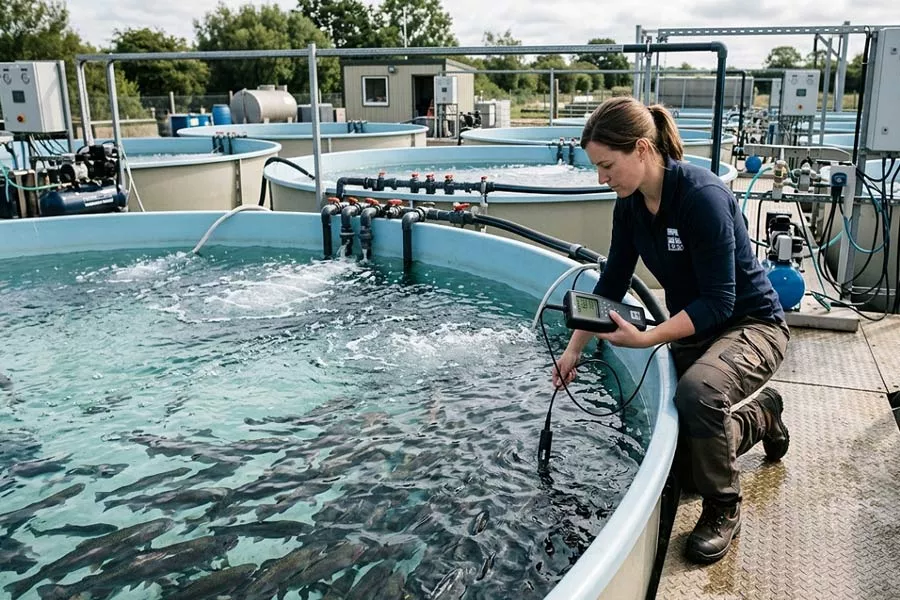
Dissolved oxygen (DO) drives success in fish culture. To grow, feed, and be stress-resistant, fish require oxygen. Thus, normal DO concentrations enhance survival and productivity. But oxygen levels vary with temperature, stocking density, and feeding practices. Therefore, fish farmers need to be cautious of the DO all year round.
DO systems help maintain optimal oxygen levels in ponds, tanks, and raceways. These systems maintain regular aeration and eliminate sudden drops in oxygen. This is because they both safeguard fish health and increase yields. In addition, effective DO systems reduce risks during seasonal shifts.
Why Dissolved Oxygen Matters in Fish Culture?
Oxygen is used to respire in fish. They get weak and stressed without sufficient oxygen. This results in stunted growth and outbreaks of diseases. Low DO levels also reduce feed efficiency. Thus, farmers incur increased expenses and reduced revenues.
On the other hand, optimal DO levels improve fish metabolism. Fish eat better and convert feed efficiently. Additionally, healthy oxygen levels support beneficial bacteria. These bacteria break down waste and maintain water quality.
Factors influencing DO Levels
Oxygen levels in aquaculture systems are affected by several factors. Knowledge of these factors helps farmers make informed decisions about the DO system.
- Temperature: Warm waters contain less oxygen. Thus, during the summer months, aeration is more powerful.
- Stocking density: Larger fish populations will use more oxygen rapidly.
- Feeding rates: The higher the feeding, the more waste and oxygen will be required.
- Growth of algae: Algae generate oxygen in the daytime but use it during the night.
- Moving water: Still water minimizes the distribution of oxygen.
Due to these factors, the DO levels may change quickly. Therefore, farmers must monitor and manage oxygen levels continuously.
DO Systems used in fish culture
There are various DO systems applicable across various aquaculture systems. All systems have their own advantages. Thus, the farmers are advised to choose systems that depend on their needs.
1. Mechanical Aerators
Mechanical aeration systems generate oxygen transfer and water movement in different ways. Diffused aeration generally produces larger bubbles that rise rapidly and provide less contact time for oxygen transfer. Paddle wheel and surface aerators rely on splashing, turbulence, and circulation at the air-water interface to increase oxygen absorption. Propeller pumps mainly create horizontal or axial flow parallel to the impeller shaft, improving mixing and directional circulation but not always maximizing direct oxygen transfer on their own. As a result, the efficiency of oxygen absorption into the water varies significantly depending on the aeration technology selected.
- Diffused aerators
- Surface aerators
- Paddle wheel aerators
- Propeller pump aerators
These aeration systems are effective in ponds; however, it is important to select the right system for the specific application. Mechanical aerators can significantly enhance water circulation and help minimize stratification, improving overall water quality and oxygen distribution. That being said, they are not the only solutions available in today’s market. Advanced technologies such as bubble tank systems and nanobubble generation can offer enhanced oxygen transfer efficiency, longer retention time, and improved treatment performance in certain applications.
2. Diffused Aeration Systems
In diffused systems, air is released through diffusers installed beneath the water. Bubbles ascend slowly, hence transferring oxygen. Such systems apply to deeper tanks and ponds.
Moreover, they consume energy efficiently. Thus, they cut down on the operational costs in the long run.
3. Injection Systems of Pure Oxygen
These systems introduce pure oxygen to water. Consequently, they attain a high DO level. They are best suited to high-density fish culture systems.
However, they need to be closely monitored. Hence, farmers should provide safety using sensors and controllers.
Seasonal Challenges and DO Management
Oxygen supply throughout the year is a matter of planning. It has its own challenges with each season. Thus, farmers will have to modify their DO systems.
Summer Management
In summer, water temperatures increase. As a result, the oxygen levels decrease. Fish also have a higher metabolic rate and thus consume more oxygen.
- Increase aeration during early morning hours
- Reduce feeding during extreme heat
- Use backup aerators for emergencies.
Winter Management
Cold water contains more oxygen. Nevertheless, fish action decreases. Hence, the oxygen demand is reduced.
- Reduce aeration intensity
- Check ice formation in colder areas
- Keep water flowing softly
Monsoon Considerations
Water balance can be disturbed by rain. It can abruptly lower oxygen levels. So, farmers should be on their guard.
- Monitor DO after heavy rainfall
- Avoid overfeeding during cloudy days
- Maintain proper drainage systems
Role of Monitoring and Automation
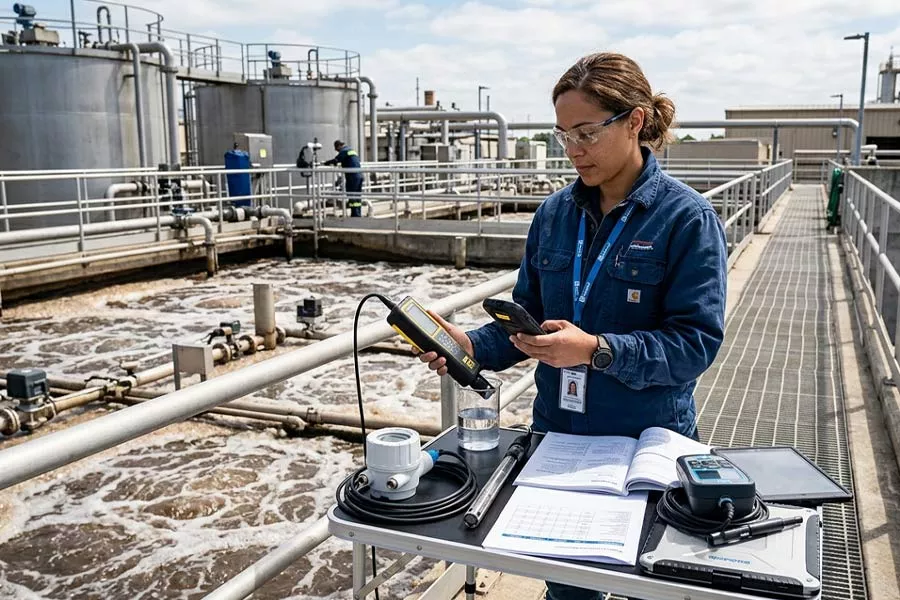
Constant DO levels cannot be guaranteed with manual monitoring. Thus, new fish farms are automated. These systems monitor the oxygen levels in real time. DO sensors provide accurate readings? Controllers control aeration using data. Consequently, farmers can easily maintain stable conditions.
Automation is also energy-saving. Only on-demand systems are run. Thus, operational costs are reduced. In addition, it minimizes human error.
Advantages of Effective DO Systems
There are several benefits to using the right DO system. These advantages directly enhance farm productivity.
- Increased growth and survival of fish
- Better feed-to-weight ratios.
- Reduced disease outbreaks
- Stable water quality
- Lower mortality rates
Moreover, effective oxygen use promotes sustainable aquaculture. It minimizes the accumulation of waste materials and environmental degradation.
Selecting the appropriate DO System
The choice of the appropriate system is pegged into several factors. Farmers ought to consider their arrangement.
- Size and depth of the water body
- Fish species and stock density
- Budget and energy availability
- Seasonal and climate changes
Furthermore, farmers should consider maintenance requirements. Consistent performance and minimized downtime are attributed to reliable systems.
Among complex aquaculture systems, companies such as Puroxi offer innovative DO systems. Their solutions help farmers maintain optimal oxygen levels effectively. Thus, farmers can get more out of less.
Maintenance and Best Practices
Frequent servicing results in system efficiency. Performance diminishes with time without maintenance. Thus, farmers ought to adhere to best practices.
- Wash diffusers and aerators
- Electrical motors and electrical components
- Calibrate DO sensors regularly
- Have backup systems in place
In addition, farmers should appropriately educate personnel. Effective maintenance will avoid system breakdowns and enhance reliability.
The optimal oxygen levels are crucial to successful fish culture. DO systems are crucial to this objective. They ensure stable conditions throughout the year. Consequently, fish are healthy and productive.
Farmers can maximize profits by selecting the appropriate system and using best practices. Besides, new solutions simplify oxygen management more than ever. Companies such as Puroxi drive this development by providing more advanced technologies, tools and products.
Dissolved oxygen enhances the respiration of fish, promotes growth, enhances immunity, and sustains water quality stability.
The optimal level of dissolved oxygen is 5 to 8mg/L in most fish.
Aerators increase water movement, enhance gas exchange, and distribute oxygen evenly across the pond.
Yes, low oxygen levels stress fish, reduce feeding, and can quickly lead to mass mortality.
Farmers should monitor oxygen levels daily, especially early morning when oxygen levels usually drop.