Compact ponds, tanks, process loops and smaller treatment trains
Puroxi nano bubble technology
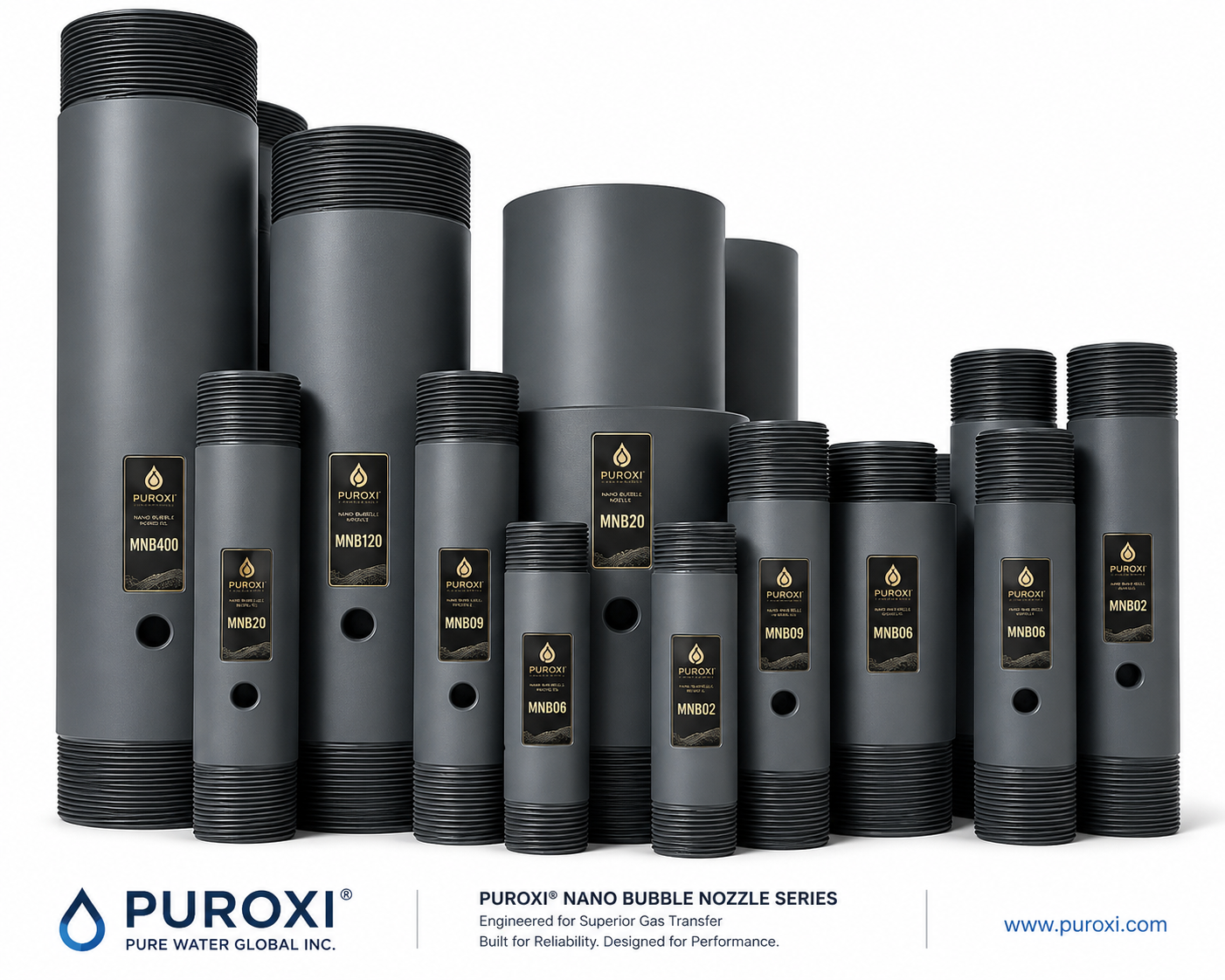
Puroxi Nano Bubble Nozzles
A complete nozzle family from 2 to 400 m³/h—selected around the water, gas, materials, hydraulics and treatment objective.
The genuine Puroxi nozzle family
One Family. Site-Specific Design.
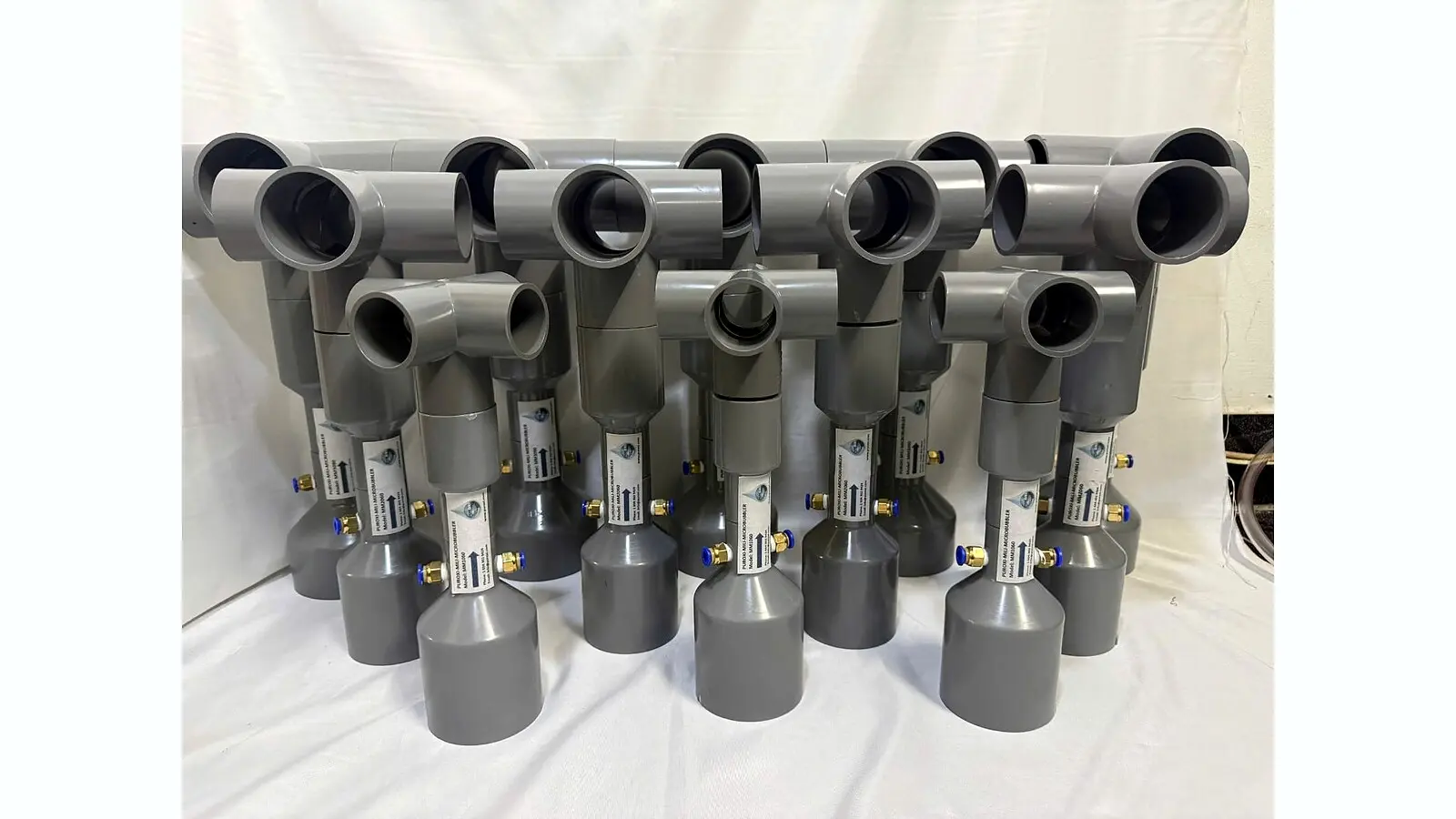
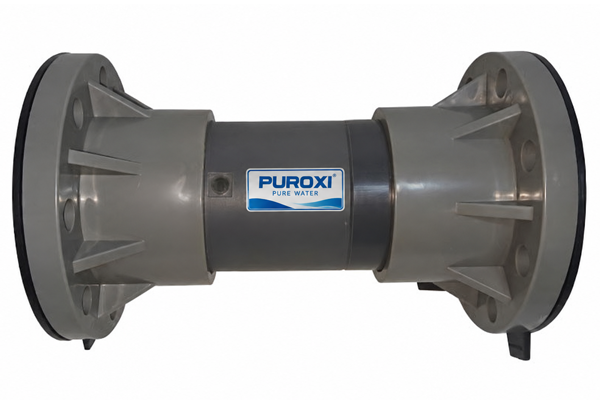
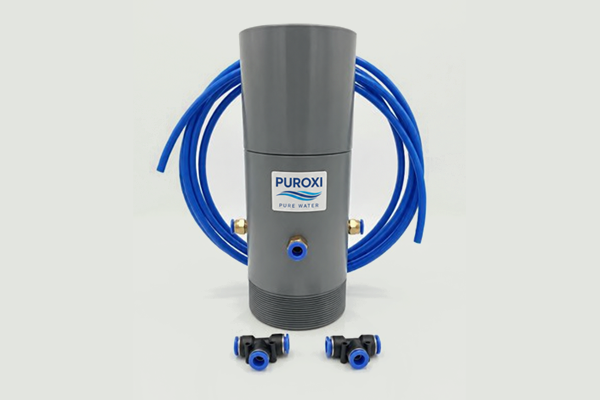
Water enters one end of the Puroxi Nano Bubble Nozzle and exits the opposite end. Gas is supplied to every gas port on the selected model. The internal flow path creates intense mixing and shearing that divides the gas stream into extremely small bubbles.
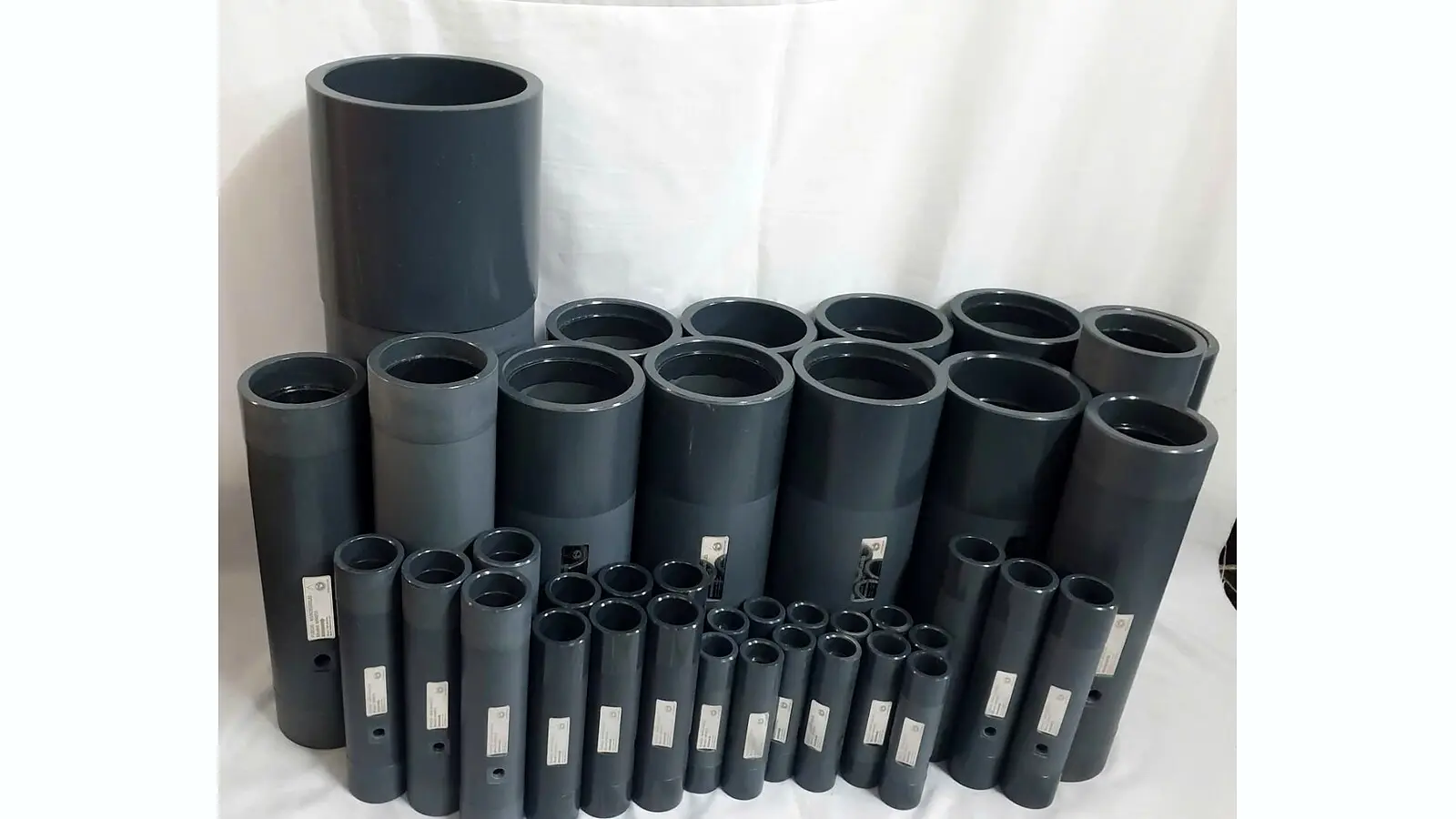
The series includes MNB02, 06, 09, 20, 30, 40, 40S, 50, 60, 60S, 80, 100, 120, 150, 180, 250, 300 and 400 models. Puroxi selects the nozzle by application, water chemistry, materials, target flow, pressure and gas.
Inside the treatment loop
One Nozzle Connects Water Flow, Gas Transfer and Distribution.
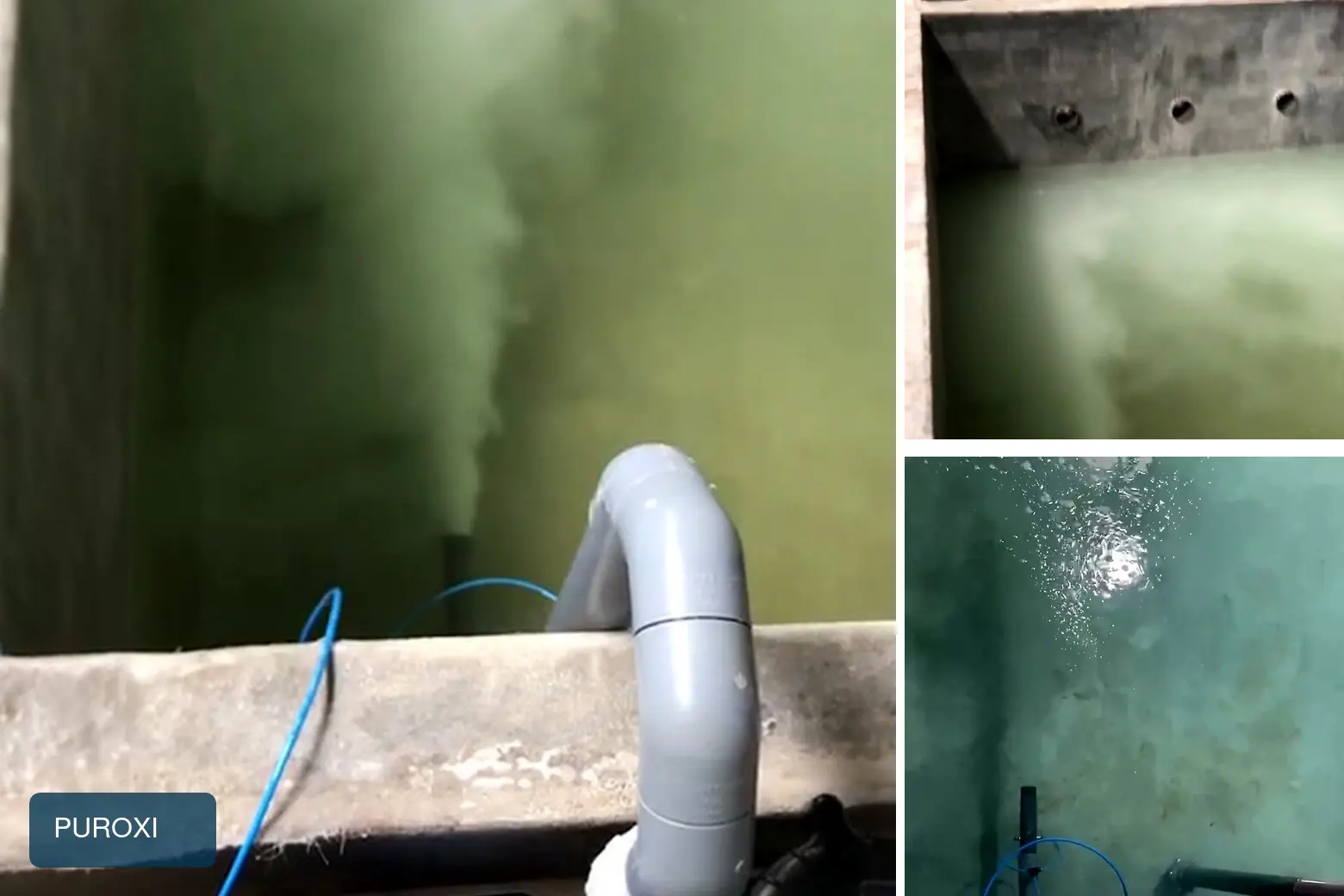
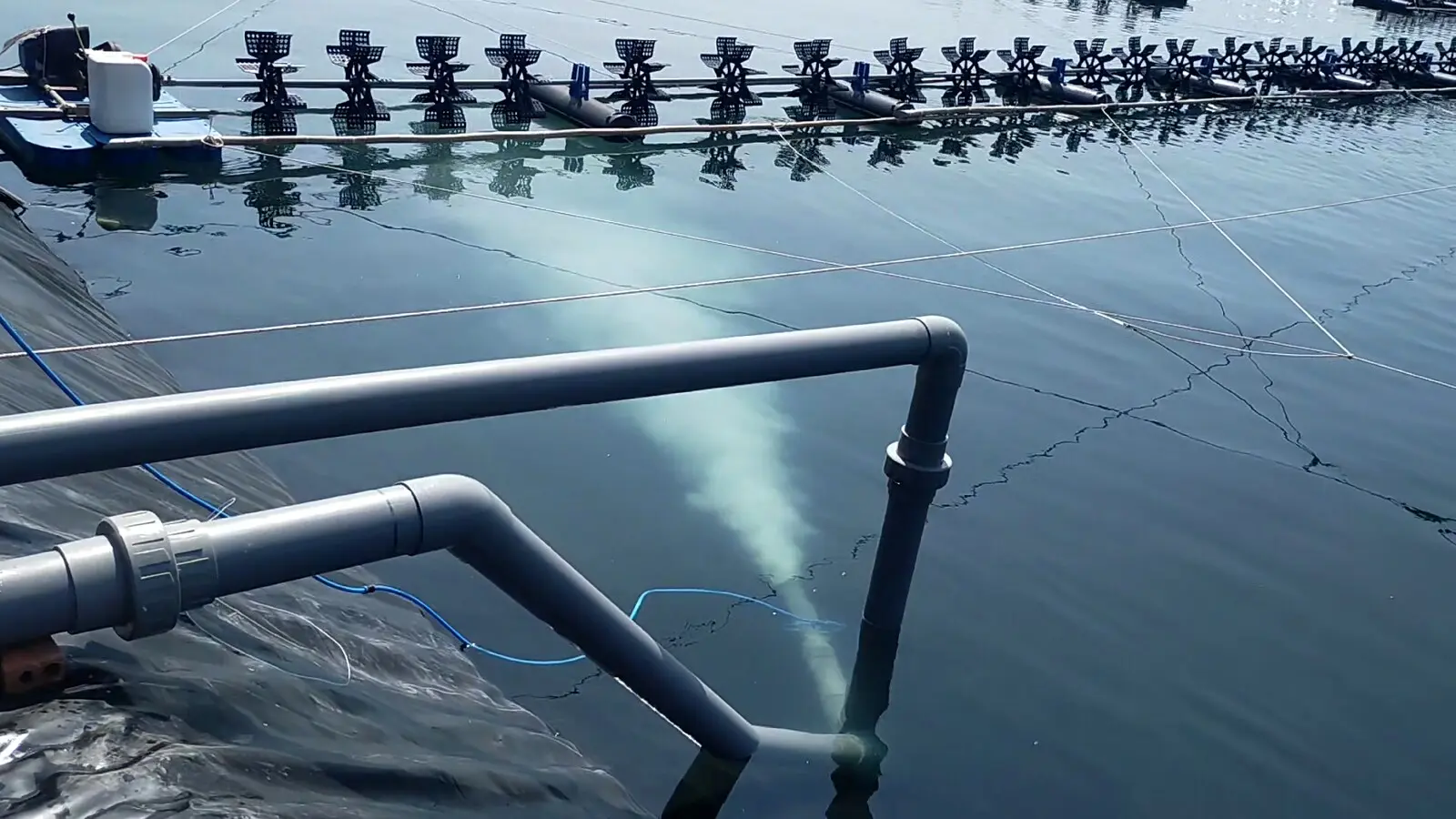
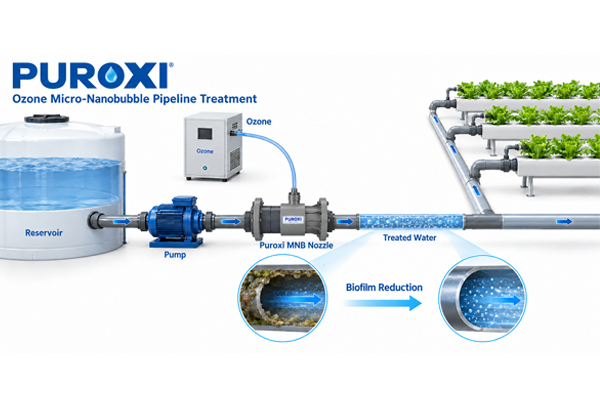
Water is pressurized through the Puroxi nozzle while ambient air, oxygen, ozone or another selected gas enters through every supplied gas port. The internal mixing action breaks the gas into an extremely fine bubble population and carries the treated water back into the application.
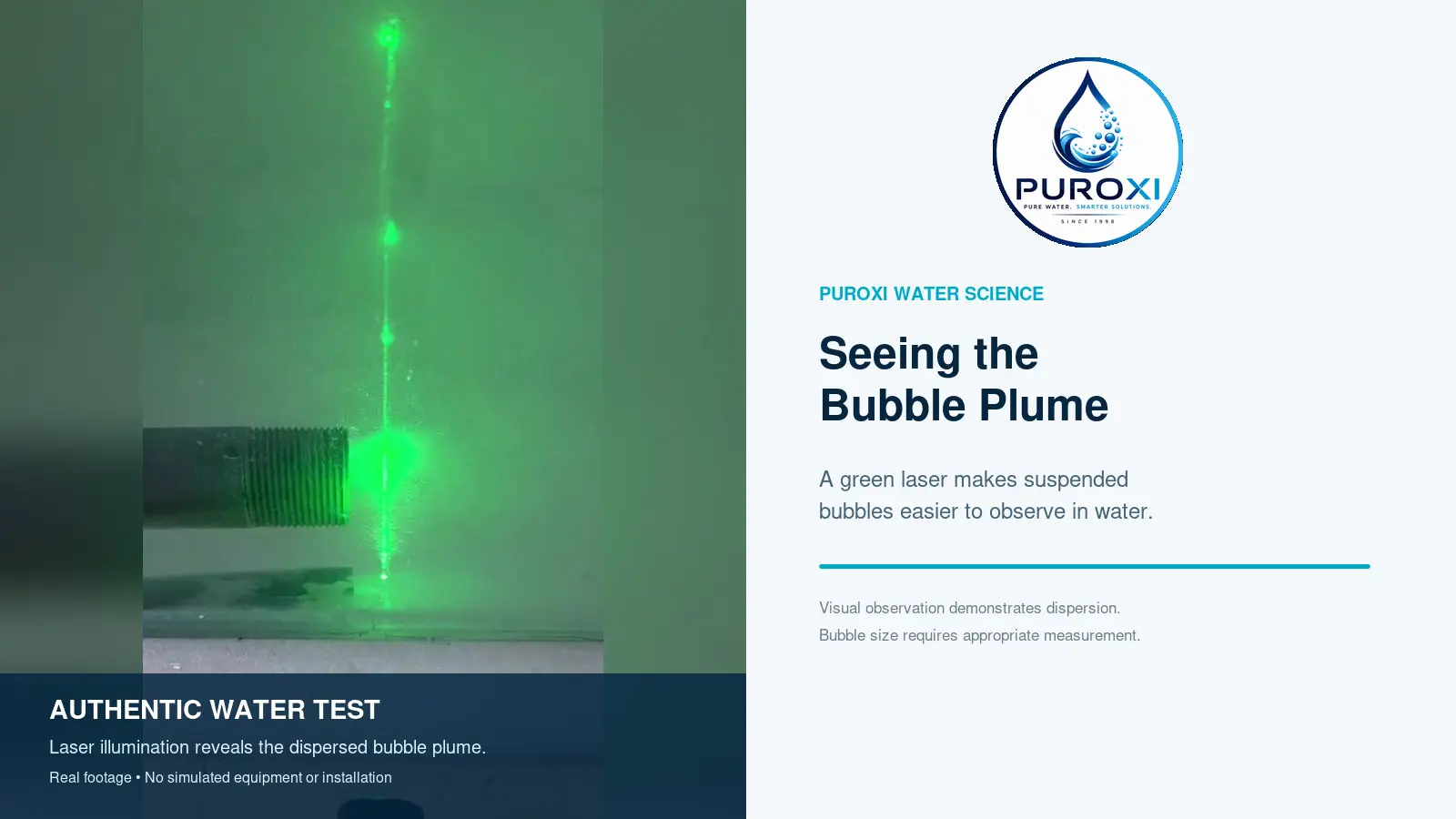
Nano bubbles behave differently from conventional large bubbles. Their very small size creates a high gas-to-water contact area, slows their rise and supports extended contact within the water column.
Model-selection overview
Start With Required Flow—Then Complete the Design
Medium-duty recirculation, agriculture, aquaculture and industrial water
Higher-flow installations and multi-branch systems
Engineered municipal, environmental and industrial projects
These are selection groupings, not a pump schedule. Final model, operating point, allowable pressure, gas rate and materials are confirmed from the current model data and site conditions.
Five stages of generation
From Water Flow to Distributed Nano Bubbles
Water enters
The pump supplies the required flow and operating pressure.
Gas enters
Ambient air, oxygen or ozone reaches every gas port on the nozzle.
Mixing begins
The internal geometry accelerates and mixes water and gas.
Bubbles divide
Shear and pressure conditions create a very high gas-to-water contact area.
Treated water exits
The designed piping and nozzle orientation distribute bubbles through the target volume.
Why very small bubbles behave differently
Suspension, Surface Area and Gas Transfer
As bubble diameter decreases, buoyant rise slows and the total surface area available for gas transfer increases dramatically. This can keep bubbles dispersed longer and improve the opportunity for oxygen or another selected gas to interact with the water.
Performance still depends on the bubble population actually produced, water chemistry, temperature, salinity, contaminants, hydraulic distribution and gas demand. Puroxi sizes the complete system rather than relying on one bubble-size claim.
Flow and turnover
Size the System Around the Water Volume
Hydraulic design
- Target flow through each nozzle
- Total dynamic head and operating pressure
- Suction, discharge and manifold losses
- Submersible or temperature-controlled surface pumps
- Isolation, check valves and service access
Gas delivery
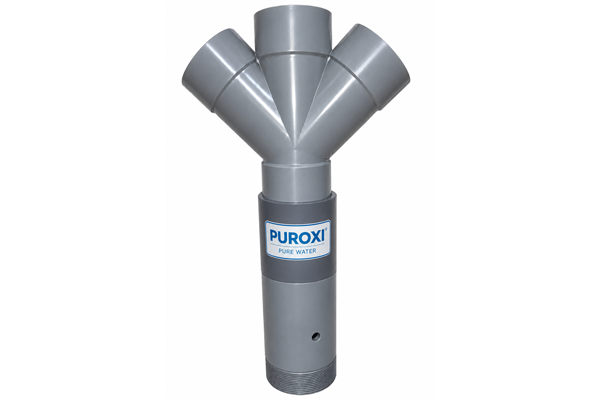
- Gas must reach every supplied port
- Use compatible locally sourced industrial tubing when more than the supplied 5 m is required
- Regulate flow and pressure for the selected nozzle
- Use the Puroxi Oxygen Generator when the design calls for oxygen
- Keep ozone materials and safety requirements application-specific
Product & installation gallery
See the Nozzle, the Connections and the Complete Loop.
Materials and connections
Specify for the Water and the Installation
Available materials
UPVC, CPVC with PTFE, PTFE, SS304 and SS316 options support different chemical, temperature and corrosion requirements.
North American piping
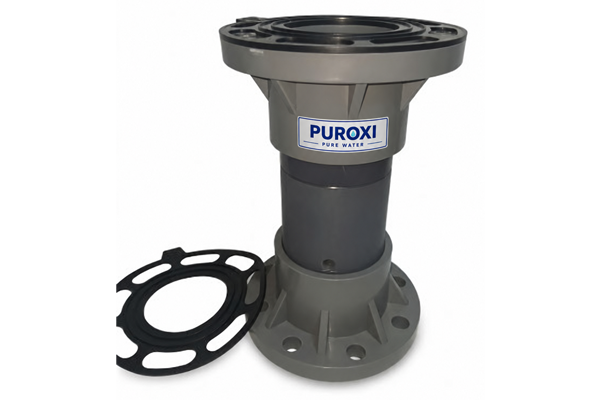
UPVC and CPVC models commonly use smooth socket or spigot ends with locally sourced slip unions, couplings, solvent-weld fittings, flanges or transitions.
Engineered standards
NPT, BSPT/BSPP, JIS, ANSI/ASME, DIN, ISO and custom connections may be available by material and model. Confirm OD, standard, pressure, temperature and local code before ordering.
Piping, cleaning and safety
Best Practices Protect Performance
Proper piping
Use correctly sized suction and discharge piping, smooth transitions, balanced manifolds and multidirectional nozzle placement where required. Every branch and fitting adds resistance.
Gas to every port
Smaller models typically use two gas ports; MNB120 and larger models may use multiple ports. Each supplied port must receive the selected gas. Each nozzle includes 5 m / 16.4 ft of tubing.
Verification
Measure flow, pressure, gas delivery, dissolved oxygen and the water-quality response instead of judging performance by visible bubbles alone.
Version 1.0 · August 3, 2026
Read the Complete Technical Manual
Model data, materials, connection guidance, pump and manifold design, installation, operating practices, cleaning, maintenance and safety.
Customer Testimonials and Field Experiences
Approved Project Stories Will Be Added Here
Puroxi will publish genuine, attributable nano-bubble customer experiences when permission and project evidence are complete. We will not invent a testimonial.
Industrial-Scale Management
Residential Water Storage Tank Treatment
A homeowner used a Puroxi MNB06 nozzle with a compact pump and filtered ambient-air intake.
Read More →