Puroxi Knowledge Centre
How Dissolved Oxygen Improves Fish Health, Growth, and Feed Conversion in Aquaculture
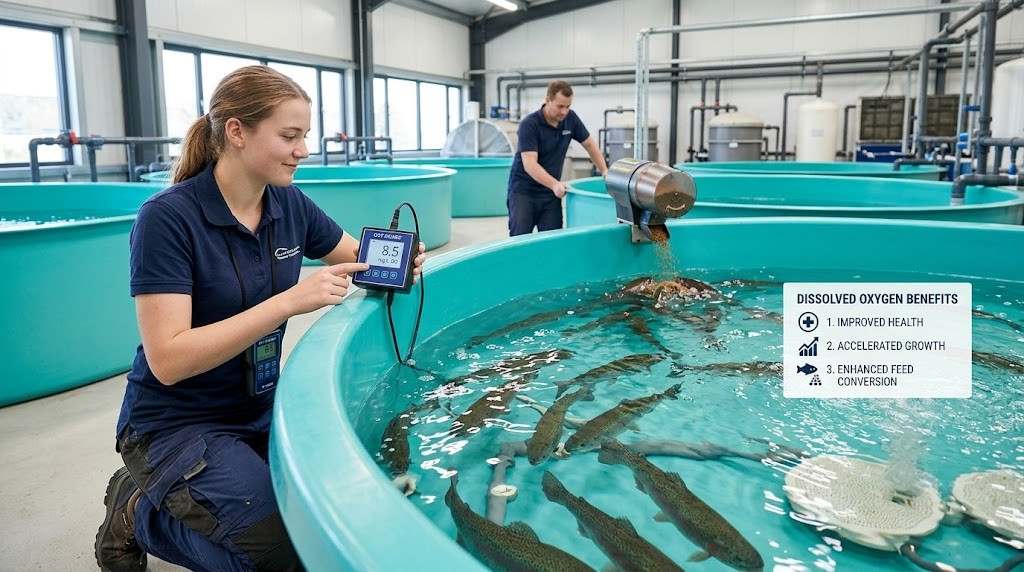
Dissolved oxygen is an important parameter for aquaculture success. Fish require oxygen for respiration, metabolism, growth, and stress resistance. A decrease in oxygen can lead to decreased feeding activity. Growth can be reduced; stress levels may be raised, and there may be a greater risk of death.
Therefore, oxygen management should continue to be an integral part of fish farming. A well-established oxygen supply produces better fish and efficient production.
New systems are available which can facilitate the monitoring and management of dissolved oxygen in modern farms. Water conditions, stocking, temperature, and oxygen requirements vary from one farm to another. So, the oxygenation should be according to the requirements of the particular operation. Prior to the selection of treatment systems, Puroxi also places a focus on water testing, hydraulic review, monitoring, and verification.
Why Dissolved Oxygen Aquaculture Management Matters
Fish get oxygen through their gills. They are not able to exploit the oxygen present in water molecules. They need dissolved oxygen in the water, rather than oxygen in the air.
Fish can have normal biological functions when dissolved oxygen is kept at appropriate levels. They can also be more active in their feeding and able to utilize nutrients more efficiently.
Low oxygen can create several problems, including:
- Reduced appetite
- Slower growth
- Increased stress
- Poor feed utilization
- Higher disease risk
- Greater mortality risk
- Uneven fish performance
- Reduced production efficiency
Puroxi notes that oxygen levels can change with temperature, biomass, feeding, algae, and circulation. Therefore, farms need to monitor changing conditions instead of relying on occasional measurements.
Dissolved Oxygen and Fish Health
Healthy oxygen levels help fish maintain normal respiration. However, oxygen demand increases as biomass grows. Feeding can also increase oxygen demand because biological activity rises after feeding.
Warm water creates another challenge. Warmer water generally holds less dissolved oxygen. Therefore, hot weather can increase the risk of oxygen stress.
Fish experiencing oxygen stress may show signs such as:
- Gasping near the water surface
- Reduced feeding
- Unusual swimming behaviour
- Gathering near water inlets
- Lower activity levels
- Increased stress
Monitoring these signs can help farmers respond before oxygen problems become severe.
Fish Farm Oxygenation Supports Better Growth
Growth depends on several factors, including genetics, nutrition, temperature, water quality, stocking density, and oxygen availability.
When oxygen becomes limited, fish may reduce their activity and feeding. Their energy then shifts toward coping with environmental stress instead of normal growth.
Effective fish farm oxygenation helps maintain suitable oxygen conditions throughout the production environment. It can also improve oxygen distribution when properly designed around the pond, tank, raceway, or recirculating system.
A reliable oxygenation programme should consider:
- Fish species
- Biomass and stocking density
- Water temperature
- Feeding schedule
- Pond or tank dimensions
- Water movement
- Existing aeration equipment
- Oxygen demand
- Emergency requirements
Puroxi recommends evaluating these factors before selecting an oxygenation approach. The company’s aquaculture process follows a test, design, treat, and verify model.
How Oxygen Can Improve Feed Conversion
Feed represents one of the highest operating costs for many aquaculture farms. Therefore, efficient feed utilization can have a major effect on profitability.
Fish need oxygen to support metabolism and normal physiological functions. When oxygen levels become inadequate, feeding can decline. Poor oxygen conditions can also reduce overall production performance.
Stable oxygen conditions can help create an environment where fish feed normally. Better feeding conditions may contribute to more consistent growth and feed utilization.
Farmers should monitor:
- Daily feed consumption
- Fish behaviour
- Growth rates
- Feed conversion
- Mortality
- Dissolved oxygen
- Water temperature
- Stocking density
These measurements help farmers connect oxygen conditions with actual production results.
Choosing an Aquaculture Oxygen System
An aquaculture oxygen system should match the farm’s actual water and production requirements. There is no single oxygenation method that works identically across every facility.
Traditional aeration can improve gas exchange and water movement. However, advanced oxygenation technologies can provide different approaches to gas transfer.
Puroxi describes nano-bubble oxygenation as one option for improving oxygen transfer in suitable aquaculture applications. Its systems can be designed around the water conditions, hydraulic requirements, oxygen demand, and monitoring strategy.
A suitable system may help farms address:
- High oxygen demand
- Uneven oxygen distribution
- Night-time oxygen drops
- High biomass
- Limited circulation
- Seasonal oxygen fluctuations
- Emergency oxygen requirements
Puroxi also highlights continuous or frequent dissolved oxygen and temperature monitoring. Measuring conditions at different depths can provide a clearer picture of oxygen distribution.
Shrimp Pond Oxygenation and Survival
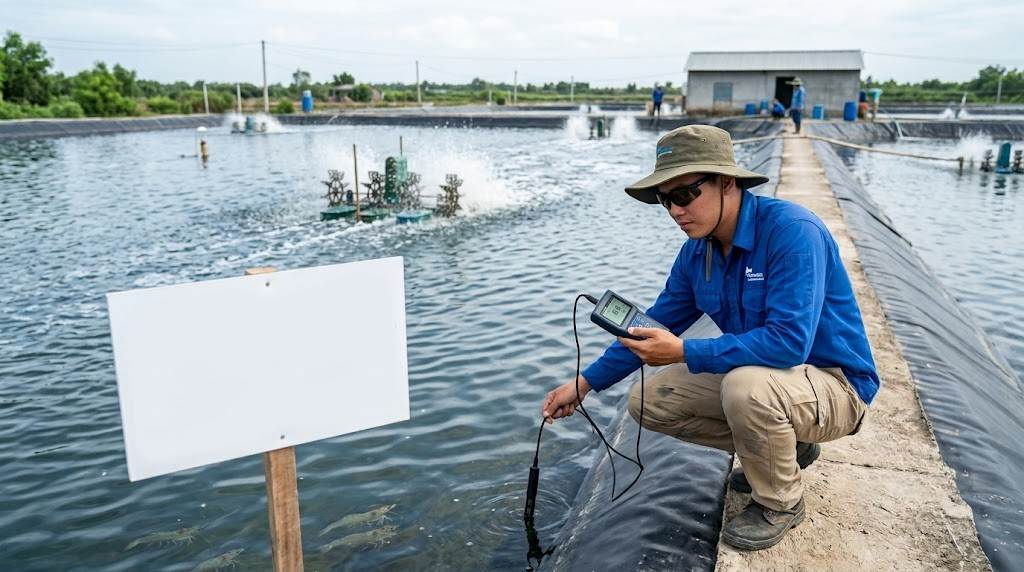
Oxygen management is equally important for shrimp farming. Shrimp need dissolved oxygen for respiration, feeding, growth, and overall health.
Oxygen levels can change significantly throughout the day. At night, algae and plants stop producing oxygen through photosynthesis. They continue consuming oxygen instead. Consequently, oxygen levels can reach their lowest point before sunrise.
This makes shrimp pond oxygenation an important part of pond management.
Farmers should consider:
- Shrimp stocking density
- Feeding levels
- Temperature
- Algae activity
- Organic accumulation
- Pond circulation
- Oxygen levels at different depths
- Night-time oxygen conditions
Puroxi specifically notes that shrimp systems may require careful oxygenation while preserving beneficial diatoms. Its guidance recommends reviewing species and food-web conditions before adding other treatment technologies.
Build a Proactive Oxygen Management Plan
Oxygen management should not begin only after fish start showing stress. Instead, farms can develop a preventive programme.
Useful steps include:
- Measure dissolved oxygen regularly.
- Record water temperature alongside oxygen readings.
- Monitor oxygen at different ponds or tank depths.
- Track feeding and fish behavior.
- Review oxygen conditions before sunrise.
- Maintain backup oxygen capacity.
- Check pumps, lines, and oxygen equipment regularly.
- Compare oxygen data with growth and feed conversion.
Puroxi recommends documenting baseline conditions, treatment settings, operating changes, and follow-up results. This approach helps farms verify whether an oxygenation programme meets its intended objective.
Improve Aquaculture Performance Through Better Oxygen Management
Dissolved oxygen affects much more than fish survival. It influences feeding, metabolism, growth, stress, and production efficiency.
A well-designed oxygenation strategy can help farms create more stable water conditions. However, successful oxygen management requires more than installing equipment. Farmers should understand their water, biomass, temperature, feeding patterns, circulation, and oxygen demand.
With proper testing and monitoring, aquaculture operations can make better oxygen-management decisions. This can support healthier fish, more consistent growth, and better feed utilization.
If you want to evaluate your aquaculture water conditions and explore an oxygenation strategy designed around your operation, contact Puroxi for a site-specific water treatment and oxygenation approach.
Frequently Asked Questions
Dissolved oxygen supports fish respiration, metabolism, feeding activity, growth, stress resistance, and overall survival in aquaculture systems.
Adequate oxygen supports normal metabolism and feeding, helping fish maintain consistent growth throughout their production cycle.
Fish farm oxygenation introduces oxygen into water while improving distribution, helping maintain suitable conditions for aquatic animals.
Shrimp pond oxygenation helps maintain oxygen availability, especially during nighttime periods when natural oxygen production decreases.
Farms should monitor oxygen frequently while tracking temperature, depth, feeding, biomass, behavior, and equipment performance for context.