Puroxi Knowledge Centre
Can Nanobubbles Improve Biological Wastewater Treatment Performance?
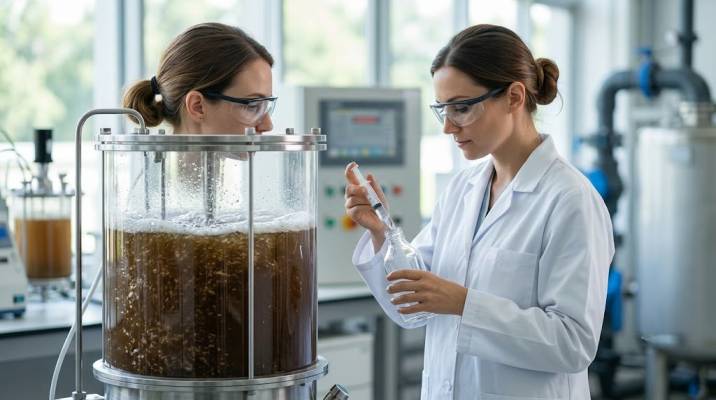
Biological wastewater treatment relies on good biology. These microorganisms decompose organic material and eliminate toxic substances. They require sufficient dissolved oxygen , however, to remain active. Standard aeration systems are energy inefficient and provide variable aeration.
For this reason, a lot of industries are now researching nanobubble technology. These are small bubbles that enhance the transfer of oxygen and boost treatment efficiency. They also make it easier to lower operating costs and to maintain healthy biological processes.
In this blog, you will get to learn how nanobubbles enhance the performance of the biological wastewater treatment process and why that is a preferred solution.
What Are Nanobubbles?
Nanobubbles are very tiny bubbles of gas. They typically have diameters of less than 200 nm. Unlike ordinary bubbles, they can stay in the water for extended periods.
Due to their small size, nanobubbles have several benefits.
These include:
- Higher dissolved oxygen levels
- Better oxygen transfer efficiency
- Longer oxygen retention
- Improved water circulation
- Increased microbial activity
- Lower energy consumption
As a result, wastewater treatment systems perform more efficiently.
Why Oxygen Matters in Biological Wastewater Treatment
Biological treatment relies on aerobic bacteria. These microorganisms consume organic waste and convert it into harmless substances.
However, poor oxygen transfer creates several problems.
These include:
- Slow biological reactions
- Higher sludge production
- Poor ammonia removal
- Increased odors
- Reduced treatment capacity
- Higher operating expenses
Therefore, maintaining stable dissolved oxygen remains essential for treatment success.
How Nanobubbles Improve Oxygen Transfer
Traditional aeration creates large bubbles. These bubbles rise quickly and escape before transferring enough oxygen. Nanobubbles behave differently.
They stay suspended much longer. Therefore, oxygen remains available for microorganisms over extended periods.
Furthermore, nanobubbles offer a much larger surface area. This increases oxygen transfer efficiency without increasing airflow. Consequently, treatment plants achieve better performance using less energy.
Benefits of Nanobubbles in Biological Wastewater Treatment
1. Higher Dissolved Oxygen Levels
Nanobubbles maintain consistently dissolved oxygen throughout the treatment basin. As a result, aerobic bacteria remain active all day.
Stable oxygen levels also reduce process fluctuations. Therefore, operators gain better process control.
2. Faster Organic Waste Breakdown
Healthy bacteria digest organic matter more efficiently. Because oxygen remains readily available, microorganisms work continuously.
Consequently, Biological Oxygen Demand (BOD) removal improves. Chemical Oxygen Demand (COD) reduction also becomes faster. This improves overall wastewater quality.
3. Better Ammonia Removal
Nitrifying bacteria require large amounts of oxygen. Unfortunately, oxygen shortages slow nitrification.
Nanobubbles solve this challenge by supplying continuous oxygen. Therefore, ammonia converts into nitrate more effectively. This helps facilities meet discharge regulations.
4. Lower Sludge Production
Efficient biological activity improves waste digestion. Consequently, excess sludge production decreases.
Less sludge means:
- Lower disposal costs
- Reduced handling requirements
- Smaller storage needs
- Better plant efficiency
Therefore, operating expenses decline.
5. Reduced Energy Consumption
Aeration often represents over half of a wastewater plant’s electricity use. Traditional blowers consume significant power.
Nanobubble systems improve oxygen transfer efficiency. Therefore, operators achieve similar or better results with less energy. This creates substantial long-term savings.
6. Improved Microbial Health
Healthy microorganisms create a stable biological treatment. Nanobubbles supply oxygen evenly throughout the tank. As a result, bacteria avoid oxygen stress.
They continue breaking down pollutants efficiently. Therefore, treatment remains stable even during heavy loading.
Applications Across Different Industries
Nanobubble technology benefits many industries.
Common applications include:
- Municipal wastewater treatment
- Food processing plants
- Beverage manufacturing
- Dairy facilities
- Pharmaceutical production
- Chemical manufacturing
- Textile industries
- Paper mills
- Aquaculture wastewater
- Industrial effluent treatment
Each industry benefits from better oxygen transfer and improved biological activity.
Additional Advantages of Nanobubbles
Besides improving biological treatment , nanobubbles offer several additional benefits.
These include:
- Better water clarity
- Reduced foul odors
- Improved mixing
- Less foam formation
- Enhanced biofilm performance
- Increased treatment capacity
Moreover, many facilities delay expensive plant expansions because existing systems perform more efficiently.
Challenges with Conventional Aeration
Traditional aeration systems have several limitations.
For example:
- Large bubbles escape quickly.
- Oxygen transfer remains inefficient.
- Energy costs stay high.
- Maintenance requirements increase.
- Uneven oxygen distribution creates dead zones.
- Biological performance becomes inconsistent.
Therefore, many facilities seek advanced oxygenation technologies.
Why Nanobubbles Represent the Future
Environmental regulations continue to become stricter. Meanwhile, energy costs continue rising. Treatment facilities need smarter solutions.
Nanobubbles address both challenges. They improve biological performance while lowering operating expenses.
Furthermore, they require fewer chemical additions. Many plants also experience improved compliance with discharge standards. Consequently, nanobubble technology continues to gain attention worldwide.
Best Practices for Maximum Results
Facilities should follow several practices when adopting nanobubble technology.
These include:
- Monitor dissolved oxygen regularly.
- Maintain proper microbial balance.
- Inspect equipment routinely.
- Optimize airflow settings.
- Track biological performance.
- Evaluate energy consumption.
- Perform regular water quality testing.
Following these steps helps maximize treatment efficiency.
Choose PUROXI for Advanced Water Treatment Solutions
If your wastewater treatment system needs higher oxygen transfer efficiency, PUROXI can help. PUROXI provides effective, customized solutions for water treatment purification , and conservation with a family of natural products and unsurpassed expertise. Our advanced oxygenation technologies help industries improve biological treatment performance while reducing energy costs and increasing operational efficiency.
Nanobubbles increase dissolved oxygen, boost microbial activity, accelerate pollutant removal, reduce sludge, and improve treatment efficiency significantly.
Yes. They transfer oxygen more efficiently, consume less energy, improve treatment stability, and lower long-term operating expenses effectively.
Yes. Better biological activity improves waste digestion, producing less excess sludge and lowering disposal costs considerably overall.
Municipal plants, food processing, pharmaceuticals, textiles, aquaculture, chemical manufacturing, paper mills, and beverage industries benefit greatly.
Yes. Higher oxygen transfer efficiency reduces blower operation, lowering electricity consumption while maintaining excellent biological treatment performance.