Puroxi Knowledge Centre
Cooling Tower Water Safety Plans: Preventing Legionella Before It Starts
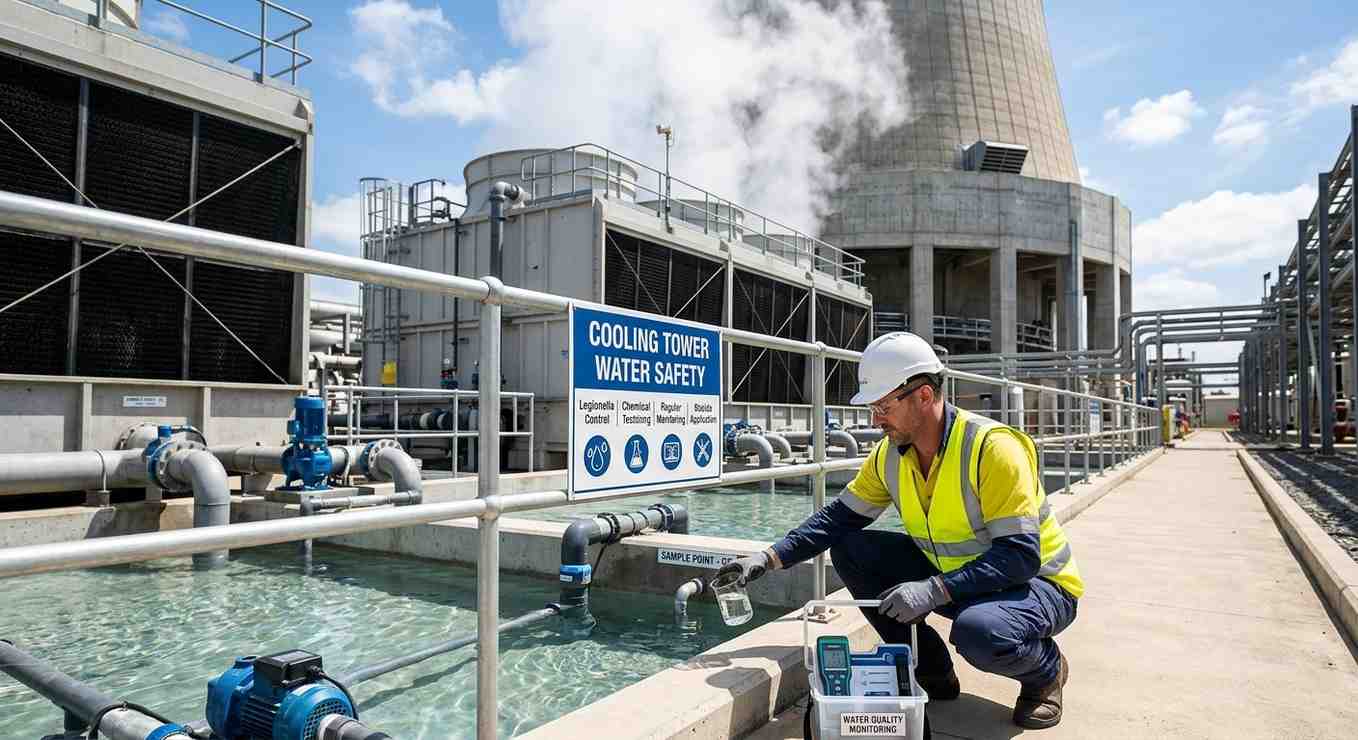
Cooling towers are a key component of many industrial and commercial facilities. They help in controlling heat and optimize system efficiency. But they can also provide the ideal conditions for the growth of harmful bacteria. Legionella poses one of the greatest concerns.
Legionella bacteria can grow in warm, stagnant water. If contaminated water changes to mist, individuals could inhale the bacteria. This can cause Legionnaires’ disease, a serious lung infection caused by Legionnaires’ disease.
So, all facilities must have an effective water safety plan. Prevention is better than cure, and these problems can be averted with a proactive stance. Most significantly, it safeguards equipment and human health.
What Is a Cooling Tower Water Safety Plan?
A water safety plan for cooling towers is a plan of action. It helps to regulate water quality and lessen microbial risks.
This plan is used to identify hazards, monitor conditions, and implement corrective actions. It also ensures consistent maintenance.
A good plan focuses on:
- Risk assessment
- Water treatment
- Monitoring schedules
- Cleaning routines
- Emergency response
Together, these steps reduce the chance of bacterial growth.
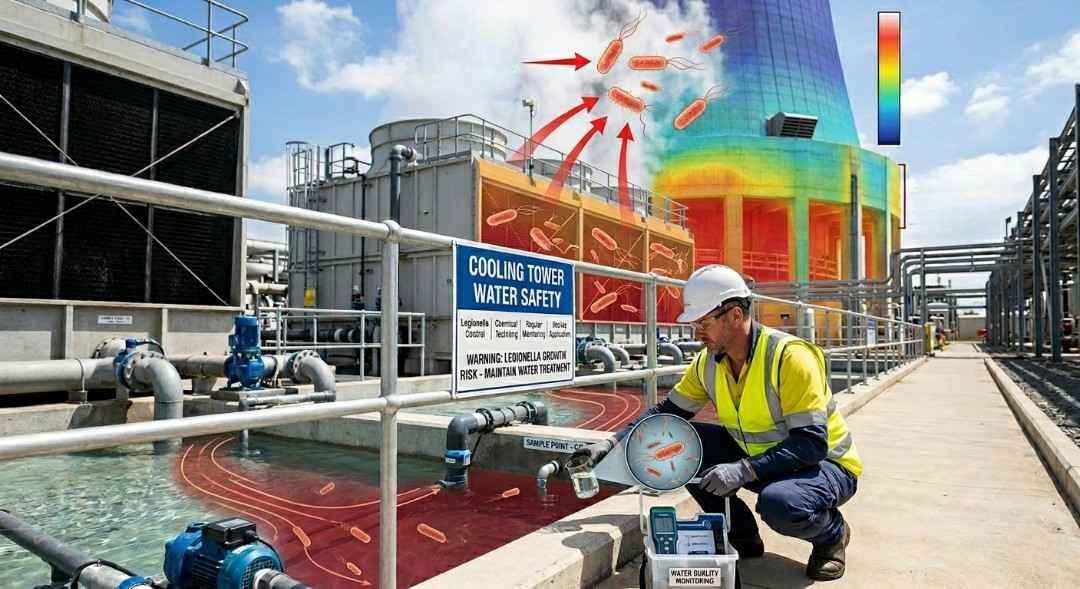
Why Legionella Grows in Cooling Towers
Cooling towers often operate between 20°C and 45°C. Unfortunately, this temperature range supports Legionella growth.
Several factors increase risk. For example:
- Warm Water: Warm water encourages bacterial multiplication. As temperatures rise, growth becomes faster.
- Stagnation: Low flow creates stagnant zones. These dead zones allow biofilm to form.
- Biofilm Formation: Biofilm acts like a shield. It protects bacteria from disinfectants.
- Scale and Sediment: Mineral buildup creates surfaces for bacteria to attach and multiply.
Therefore, controlling these conditions is essential.
Why Prevention Matters
Preventing contamination costs less than handling an outbreak.
An outbreak can lead to:
- Health emergencies
- Legal liability
- Regulatory penalties
- Expensive shutdowns
- Reputation damage
Moreover, emergency remediation often costs much more than routine prevention. That is why prevention should always come first.
Key Components of an Effective Water Safety Plan
A strong safety plan covers multiple control points.
1. Conduct a Risk Assessment
Start by evaluating the system. Identify areas where water may stagnate. Check piping layouts, basins, drift eliminators, and heat exchangers.
Ask questions such as:
- Where does water collect?
- Are there low-flow sections?
- Is maintenance regular?
- Are aerosols escaping?
This assessment helps identify high-risk zones.
2. Maintain Proper Water Treatment
Water treatment is the heart of prevention.
Chemical treatment helps control:
- Bacteria
- Algae
- Corrosion
- Scale
However, treatment must stay consistent. Irregular dosing weakens protection. Facilities should monitor chemical levels regularly.
Important parameters include:
- pH
- Conductivity
- Biocide levels
- Temperature
- Turbidity
When these values stay within target ranges, systems remain safer.
3. Improve Dissolved Oxygen Management
Dissolved oxygen is a key water quality parameter. A well-balanced oxygen level promotes better water quality. They also reduce anaerobic zones where undesirable microorganisms are able to flourish. That’s where advanced oxygen technology makes a difference.
Puroxi provides the most cutting-edge solutions for water treatment and oxygen control. They also offer Advanced Dissolved Oxygen Systems to enhance oxygen transfer efficiency. This, in turn, results in improved water circulation and biological control in facilities.
These systems can limit risks associated with stagnation. In addition, improved oxygen distribution results in greater overall water stability.
4. Use Advanced Oxidation Products
Modern oxidation technologies improve microbial control. Puroxi’s Water Treatment Solutions include advanced oxidation products designed to support safer water systems.
Two useful solution categories include:
- Advanced Dissolved Oxygen Systems
- Oxidation-based water treatment products
These technologies help reduce microbial loads quickly. They also improve system cleanliness. As a result, cooling towers remain safer for longer periods.
5. Schedule Routine Cleaning
Even the best treatment cannot replace cleaning. Sediment, sludge, and organic matter build up over time. Therefore, regular cleaning is essential.
Routine cleaning should include:
- Basin cleaning
- Debris removal
- Nozzle inspection
- Drift eliminator cleaning
- Scale removal
Clean systems perform better. They also lower bacterial risk.
6. Monitor for Legionella
Testing provides early warning. Routine microbial testing helps detect contamination before it spreads.
Testing frequency depends on:
- Tower size
- Facility type
- Regulations
- Historical risk
Many facilities test monthly or quarterly. Regular testing supports faster intervention.
7. Keep Detailed Records
Documentation matters. Record every action.
This includes:
- Cleaning dates
- Inspection reports
- Test results
- Chemical dosing
- Corrective actions
Records improve accountability. They also help during audits or investigations. Good documentation shows compliance.
Warning Signs You Should Never Ignore
Some signs indicate rising contamination risk.
Watch for:
- Slimy surfaces
- Strong odors
- Visible algae
- Increased scaling
- Cloudy water
- Falling efficiency
These symptoms often signal treatment issues. Address them immediately. Delays increase risk.
Staff Training Is Critical
Even strong plans fail without trained people.
Staff should understand:
- Safety procedures
- Sampling methods
- Cleaning protocols
- Emergency response
Training reduces mistakes. It also improves response speed. Regular refresher sessions help maintain consistency.
Emergency Response Planning
Every facility needs a response plan.
If Legionella levels rise:
- Isolate affected areas
- Increase treatment
- Clean immediately
- Retest water
- Document actions
Quick action limits exposure. Prepared teams respond faster and better.
Technology Makes Prevention Easier
Modern monitoring tools improve control.
Smart sensors can track:
- Temperature
- Oxygen levels
- pH
- Conductivity
Real-time monitoring reduces guesswork. Teams can act before conditions worsen. This makes prevention more reliable. Automation also improves consistency.
Cooling tower safety requires continuous attention. The first step in Legionella prevention is planning, monitoring, and maintenance. Little problems can turn into big problems. As a result, facilities must be proactive and take action early. A water safety plan helps minimize contamination, protect equipment, and keep people safe.
If you want advanced solutions for cooling tower water treatment, Puroxi can help. Puroxi Official Website provides innovative water treatment technologies, including Advanced Dissolved Oxygen Systems and oxidation solutions that support safer, cleaner cooling tower operations. Contact Puroxi today to strengthen your Legionella prevention strategy.
Warm stagnant water, biofilm, and poor treatment create ideal conditions for bacterial growth and spread.
Most systems need routine cleaning every few months, depending on usage and contamination risk levels.
Proper oxygen levels reduce stagnant zones and support healthier water conditions inside cooling systems.
Legionella mainly spreads through inhaled contaminated mist, not by drinking water under normal conditions.
They improve monitoring, treatment, cleaning, documentation, and rapid response to contamination issues effectively.