Puroxi Knowledge Centre
Oxygen Transfer Technology in Industrial Water Systems: Beyond Traditional Chemicals
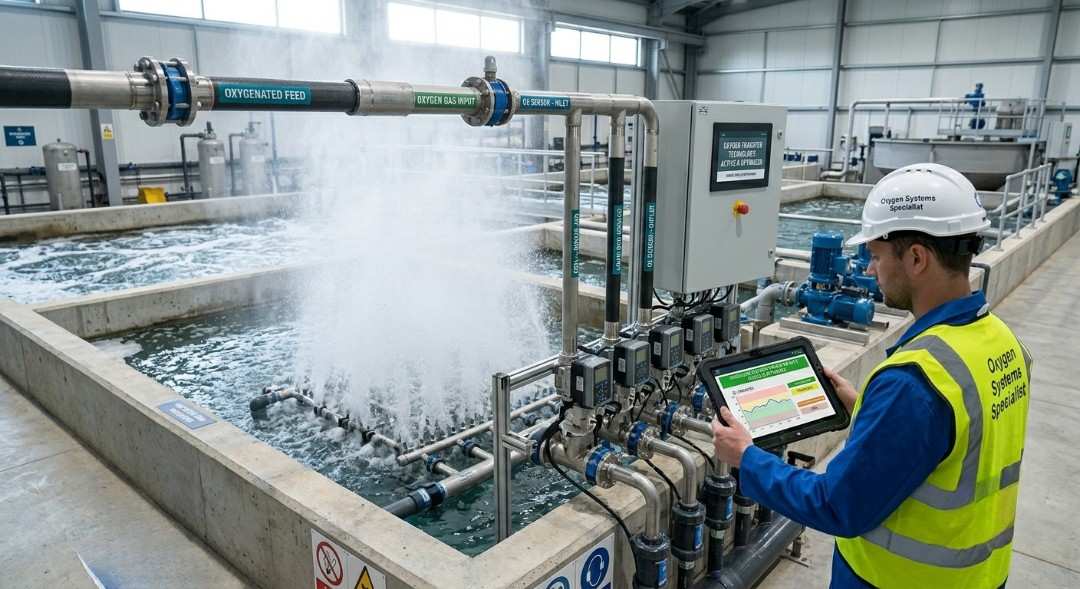
Performance is affected in numerous industries by water quality. It disrupts efficiency, safety, and operating expenses. But traditional water treatment chemicals are still widely used in many industrial systems. Chemicals are used to eliminate short-term problems but can cause long-term issues.
Industries require innovative solutions today. Oxygen transfer technology is here to come to the rescue. Improves water quality in a sustainable way. Most significantly, it lowers the reliance on chemicals and increases system performance.
Today, industries are using advanced dissolved oxygen systems to help control and keep their water healthier. This allows businesses to boost productivity and to reduce maintenance expenses.
What is the Oxygen Transfer Technology?
The technology of transfer of oxygen is used to raise the amount of dissolved oxygen in water. Dissolved oxygen is very important in biochemical and biological activities. Promotes the growth of aerobic bacteria, enhances oxidation, and removes harmful compounds.
Oxygen levels in industrial water systems can become depleted if they have a high organic load or poor circulation, or if they are contaminated. Low oxygen is a serious issue. It can generate odors, sludge accumulations, corrosion, and treatment inefficiency.
Oxygen transfer systems address the issues by releasing oxygen directly into the water. This process can rapidly and efficiently enhance the water quality. Oxygen transfer is more natural than chemical methods, which use a lot of chemicals. Thus, it promotes a healthier and more balanced water treatment process.
The limitations of traditional chemicals
Chemicals have been used for decades to control water quality in industries. Chlorine, biocides, coagulants, and oxidizers continue to be widely used. Contaminants can be controlled by these products. But they do have their drawbacks.
- Treatment is a cost factor in operation over the years. Retesting is an ongoing cost.
- Chemicals can kill good bacteria. This decreases the efficiency of biological treatment.
- Overuse can produce dangerous side effects. These byproducts can impact equipment and environmental compliance.
- Chemical storage poses safety hazards. It is important to follow strict procedures and training when handling concentrated chemicals.
As a result, there are many facilities that are now looking for alternatives. A cleaner route is provided by oxygen transfer technology.
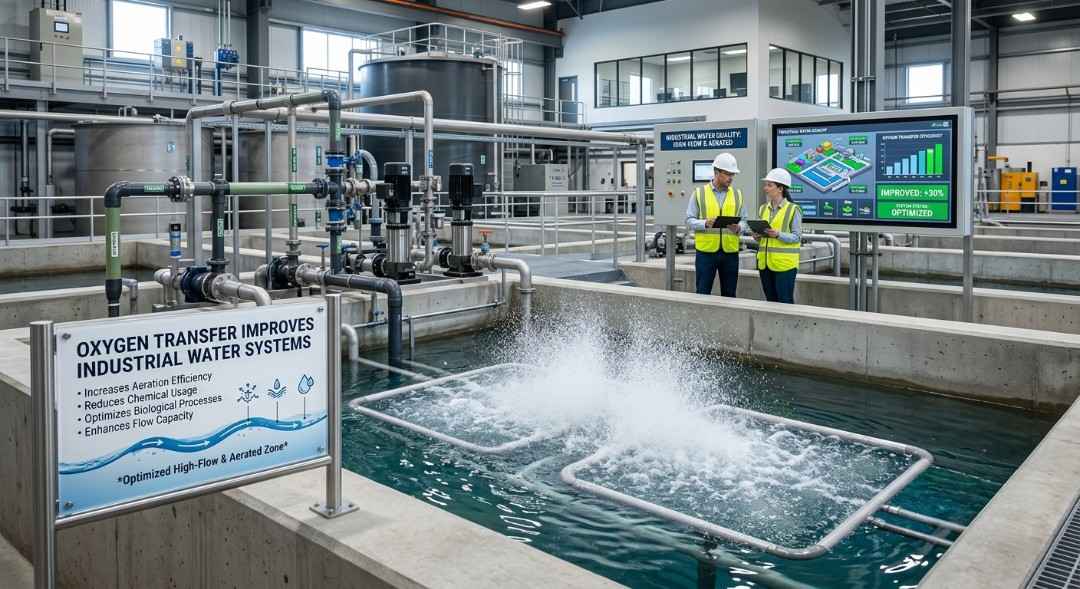
How Oxygen Transfer Improves Industrial Water Systems
The supply of oxygen-rich water helps to improve system performance. It enhances the biological activity and triggers the oxidation processes. Due to this, contaminants degrade more rapidly.
Some of the advantages:
- Faster Organic Breakdown: These aerobic bacteria require oxygen to break down organic wastes. These microbes are activated if the oxygen level increases. This results in reduced sludge build-up and better treatment efficiency.
- Reduced Odors: Anaerobic conditions are frequently created by low oxygen. These conditions lead to the formation of hydrogen sulfide and other noxious gases. Avoid odors from lower DO. As a result, facilities have cleaner air and improved working conditions.
- Better Water Clarity: The better the oxidation, the more suspended impurities will be removed. This helps to provide clearer and cleaner water. Furthermore, clearer water enhances downstream processes.
- Lower Chemical Dependency: Because of oxygen transfer, fewer oxidizing chemicals and odor-control chemicals are used. This results in reduced chemical expenses and reduced handling hazards.
- Improved Equipment Life : Scaling, corrosion, and fouling due to poor water quality. Optimization of oxygen aids in keeping the water condition stable. This enables longer service life of pumps, pipes, and treatment systems.
Industries Benefiting from Oxygen Transfer Technology
Water treatment is critical to numerous industries. More sectors use oxygen transfer technology.
- Wastewater Treatment: There is an enormous benefit to municipal and industrial wastewater systems. Better oxygen supply in the treatment process, which reduces sludge generation and enhances biological treatment.
- Aquaculture: Dissolved oxygen must be maintained at a steady state in fish. Oxygen is a cause of stress and death when bad. Advanced oxygen delivery helps maintain healthy and productive aquatic environments.
- Food Processing: Organic-rich wastewater is produced in food plants—efficient removal of contaminants by oxygen transfer. This enhances adherence to treatment and lowers treatment expenses.
- Cooling Towers: Biofilm, bacterial growth, and poor water quality are often problems in cooling systems. More oxygen means cleaner systems and/or better thermal performance.
- Manufacturing: Process water required at factories must be reliable. Oxygen transfer enhances re-use and reduces contamination hazards.
Advanced Dissolved Oxygen Systems from Puroxi
Modern oxygen transfer solutions are much more efficient than simple aeration systems. For industrial water systems, Puroxi is an expert in advanced dissolved oxygen technologies.
Two standout solutions include:
- Nano Bubble Oxygen System: The use of Nano bubble technology produces extremely minute oxygen bubbles. These bubbles float for longer than normal bubbles. They are very small size so they provide oxygen more effectively. This results in improved transfer and distribution of oxygen. Also, nano bubbles enhance oxidation and reduction of biofilm.
- Advanced Dissolved Oxygen Injection System: This system provides accurate oxygen control in the most challenging industrial settings. Maintains constant DO levels. This means that facilities can maintain stable water quality while using less chemical treatment. These systems help to ensure efficiency, sustainability, and cost savings.
Why Advanced Systems Outperform Basic Aeration
In conventional aerators, air is fed into water. But most of the oxygen escapes before it dissolves. Advanced systems have the answer to this inefficiency.
They optimize oxygen distribution, bubble size, and contact time. Consequently, the transfer of oxygen is much more efficient.
This has a number of benefits:
- Higher oxygen absorption
- Lower energy consumption
- Faster treatment response
- Reduced maintenance needs
- Better process control
Thus, facilities obtain better performance with fewer resources.
The future of industrial water treatment
The field of industrial water treatment is constantly changing. Companies are looking for solutions to be more efficient without harming the environment. The use of oxygen transfer technology is an ideal solution for this requirement.
It increases biological treatment, decreases chemical reliance, and increases system reliability. The high-tech dissolved oxygen systems will gain more prominence as industries evolve from conventional chemicals to newer ones. Those who invest in the early stages can have a solid advantage over the competition.
Looking to enhance your industrial water systems? Contact Puroxi in implementing cutting-edge dissolved oxygen solutions for enhanced efficiency, sustainability, and water quality.
It increases dissolved oxygen in water, improving treatment efficiency and reducing contamination in industrial systems.
Lower chemical use reduces costs, safety risks, and harmful byproducts while improving environmental sustainability overall.
It matters in wastewater, aquaculture, cooling towers, food processing, and manufacturing water treatment systems.
Nano bubbles stay longer in water and transfer oxygen more efficiently than regular bubbles.
Yes, cleaner water reduces fouling, corrosion, scaling, and maintenance requirements across industrial equipment systems.