 Skip to content
Puroxi Knowledge Centre
Shrimp Pond Oxygenation Systems: Increasing Survival Rates and Growth Performance
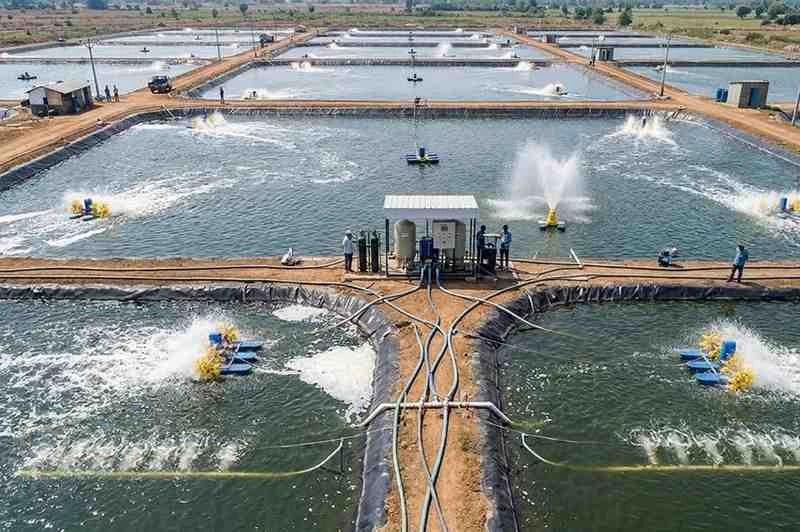
Shrimp farming depends on stable water conditions. Among all factors, oxygen is crucial to the health of the ponds. Shrimp require sufficient dissolved oxygen to grow, digest food, and resist disease. Shrimp become stressed when oxygen levels decrease. So, they grow slowly and die. Thus, oxygenation in shrimp ponds has become a critical technology in modern aquaculture. These systems, which vary in cost and maintenance needs, help farmers understand the investment required and plan accordingly. They enhance water quality and promote a healthy shrimp population, leading to higher survival rates and better harvests.
The importance of Oxygen in Shrimp Ponds
Shrimp absorb the dissolved oxygen in water. However, oxygen concentration in ponds varies continuously. Temperature, feeding activity, algal growth, and stocking density influence oxygen concentration.
Oxygen levels tend to reduce drastically during the night. At sunset, plants and algae stop producing oxygen. Instead, they consume it. As a result, ponds might be short of oxygen before sunrise.
Reduced oxygen causes severe complications, including:
- Reduced shrimp appetite
- Slower growth rates
- Weak immune systems
- Raised disease epidemics.
- Higher mortality rates
As such, farmers should ensure that the oxygen level is good both at night and during the day, empowering them to actively improve pond health and productivity.
Ideal Dissolved Oxygen Levels for Shrimp
Shrimp live and develop in an environment with dissolved oxygen levels above 5mg/L. Levels below 3 mg/L, however, cause stress. Shrimp survival is questionable when oxygen falls below 2 mg/L. In addition, unfavorable oxygen conditions influence the feed ratio. Without sufficient oxygen, shrimp cannot process food. Therefore, farmers lose feed and money.
Therefore, stable oxygenation maintains stable conditions in the pond and enhances shrimp performance.
Types of Shrimp Pond Oxygenation Systems
A series of oxygenation technologies is used in modern aquaculture. Both systems enhance the movement of oxygen and water.
1. Paddle Wheel Aerators
Paddle wheel aerators are still the most popular ones in shrimp ponds. These machines are moving paddles over the water. Consequently, they spray water into the atmosphere, enhancing oxygen uptake.
In addition, water circulation is produced by paddle wheels. This motion spreads oxygen throughout the pond.
2. Diffused Aeration Systems
Diffused aeration systems force air into pipes and diffusers. These diffusers cause microscopic bubbles to escape from the bottom of the pond. Smaller bubbles last longer in water and thus absorb more oxygen. Moreover, these systems enhance water mixing and minimize stagnant areas.
3. Venturi Aerators
Venturi aerators force air into running water. They take advantage of pressure inequalities to draw oxygen into the stream. As such, they provide an effective transfer of oxygen with minimal energy.
4. Nanobubble Oxygenation Technology
The relatively new technology in aquaculture is nanobubble technology. Such systems produce very tiny oxygen bubbles. Since they are kept in suspension, they are effective in supplying oxygen. Moreover, nanobubbles enhance water clarity and reduce pathogen levels.
Benefits of Proper Oxygenation Systems
Installing effective oxygenation systems offers several advantages for shrimp farms.
1. Higher Survival Rates
To begin with, appropriate oxygen levels will reduce stress on shrimp. The more comfortable the shrimp is, the more it can fight the disease. This leads to a significant reduction in mortality rates.
2. Faster Growth
Oxygen enhances the growth of shrimps. Their digestion is efficient, and the nutrients are converted to body mass. This results in farmers producing bigger shrimp within a shorter period.
3. Better Feed Efficiency
Aquaculture is costly due to feed costs. Nonetheless, oxygenation improves feed conversion ratios. Shrimp are more efficient in nutrient use. As such, farmers use less feed.
4. Improved Water Quality
There is also an enhancement of water circulation through aeration systems. This circulation eliminates the accumulation of harmful gases. In addition, it disperses beneficial bacteria across the pond. Consequently, the general health of ponds improves.
5. Greater Capacity of Production
At low oxygen levels, farmers can add more shrimp to their ponds. The stocking density is higher, increasing production potential. In this way, it is possible to achieve higher yields on the farms without increasing pond size.
Oxygen Management Strategies for Shrimp Farms
Technology is not a sure way to success. There is also a need for farmers to practice smart oxygen management.
- They ought to check dissolved oxygen daily. The best data is found in the early morning readings.
- Farmers should have aerators in strategic locations. Even distribution of oxygen throughout the pond is achieved by proper placement.
- They are supposed to modify aeration when feeding. During feed digestion, shrimp use more oxygen. So, further aeration will be used to keep it balanced.
- Farmers should ensure their equipment is well-maintained and functioning properly. Regular cleaning and inspection of aerators prevent failures, ensuring consistent oxygen levels. Proper equipment management reduces downtime and water quality issues, supporting stable pond conditions.
The Role of Advanced Oxygen Solutions
Due to increased shrimp farming worldwide, new technologies are enabling farmers to feel innovative and optimistic about sustainable oxygen management with less energy use. Also, the high-level solutions enhance balance in water and microbes. These are enhancements that contribute to the establishment of stable pond ecosystems.
Some companies specialize in innovative oxygenation technologies, for example, Puroxi, which serves the aquaculture industry. Their solutions help farmers ensure optimal oxygenation and water conditions and support uniform shrimp growth.
Shrimp pond oxygenation systems are very important in the success of aquaculture. They stabilize dissolved oxygen levels and provide healthy environments for ponds. As a result, shrimp became less stressed, grew faster, and had higher survival rates.
With the right systems, farms can increase productivity and achieve sustainable growth. Creative approaches by businesses such as Puroxi have been used to ensure that shrimp farmers have the best pond ecology and achieve long-term success in aquaculture.
