Puroxi Knowledge Centre
Wastewater Odor Control: How Oxygenation Can Help Reduce Unpleasant Smells
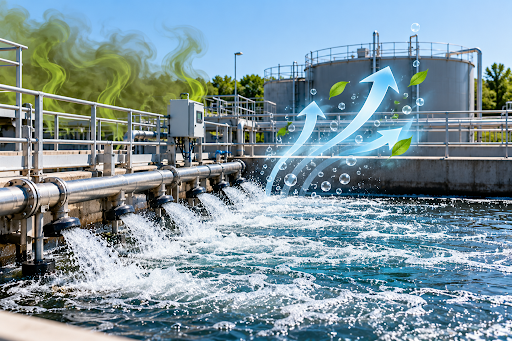
The unpleasant wastewater odors can pose significant problems for treatment plants, industrial facilities, and municipal sewer systems. If a smell persists, it may lead to complaints from neighboring communities and may be an indicator of water quality issues. A frequent cause is hydrogen sulfide, a gas that is linked to the “rotten egg” odor of wastewater.
Fortunately, wastewater odor control can start before these compounds build up. Oxygenation adds oxygen to the wastewater, which promotes aerobic microorganisms and minimizes conditions that promote odor-producing processes. This can be beneficial in the design and monitoring of a system to achieve water quality improvement and more stable wastewater treatment.
What Causes Unpleasant Odors in Wastewater?
Wastewater contains organic matter, nutrients, microorganisms and various chemical compounds. If dissolved oxygen decreases, anaerobic conditions may result. In such circumstances, some microorganisms release substances that give off odors.
Common causes include:
- Hydrogen sulfide: Smells like rotten eggs and can cause corrosion to infrastructure.
- Volatile fatty acids: These form when organic matter breaks down and can cause sour, rancid odors.
- Ammonia: May be a source of offensive odors if wastewater chemistry and pH are conducive.
- Accumulated sludge: Promotes anaerobic decomposition and emission of odorous compounds.
- Stagnant wastewater: Provides an opportunity for dissolved oxygen to drop and for odor-producing processes to occur.
- Poor maintenance: Blocked lines, poorly maintained tanks and deposits can exacerbate odor issues.
Other factors that affect odor production are temperature, pH, organic loading and retention time. So, it is important to determine the root cause first, and then choose a treatment approach.
How Oxygenation Helps Control Wastewater Odours
Oxygenation increases the amount of dissolved oxygen available in the wastewater. This helps to promote aerobic microorganisms, which decompose organic matter and may inhibit biological processes that lead to the formation of some odorous compounds.
-
Minimizes the formation of Hydrogen Sulfide (H₂S)
Hydrogen sulfide can form from microorganisms under anaerobic conditions and in the presence of sulfate. Proper oxygen control can help minimize these anaerobic processes and the production of sulfide.
Under proper conditions, oxygen can also be used to promote the biological oxidation of existing dissolved sulfides. Results, however, will vary based on wastewater chemistry, oxygen transfer efficiency and system design.
-
Supports Beneficial Microorganisms
Wastewater treatment is important for aerobic microorganisms. They consume oxygen to break down organic matter and to assist in stabilizing treatment.
Appropriate oxygenation can:
- Encourage the decomposition of organic contaminants.
- Support keeping treatment conditions more stable.
- Reduce the development of anaerobic zones.
- Optimize process operation under oxygen-deficient conditions.
However, over-aeration or inappropriate aeration can lead to higher energy use or to the release of odorous substances into the atmosphere. The operators need to adjust the amount of oxygen supplied to meet treatment needs.
-
Improves Conditions in Tanks and Pipelines
Long pipelines, force mains, pumping stations and storage tanks can cause dissolved oxygen to be depleted in wastewater. As a result, these areas can become quite smelly.
Pre-treatment oxygenation can help to maintain appropriate conditions prior to treatment in subsequent stages. Good circulation and mixing also minimize stagnant zones that can lead to deposits and anaerobic activity.
Best Practices for Effective Wastewater Oxygenation
Oxygenation is most effective when it is a component of a comprehensive odor management program. Just adding air is not enough to ensure effective results. Rather, operators should consider system conditions and choose appropriate equipment.
Recommended practices include:
- Monitor dissolved oxygen: Measure DO at critical treatment points and adjust delivery as needed.
- Conduct odor inspections: Lift stations, pipelines, equalization tanks, and sludge handling areas.
- Enhance mixing: Make sure that oxygen is distributed to the desired treatment areas and not just to one area.
- Maintain equipment: Regularly check diffusers, pumps, injectors and oxygen delivery systems.
- Monitor performance: Before and after, read hydrogen sulfide levels, odor complaints, oxygen levels and treatment results.
- Control deposits: Eliminate deposits of sludge and organic debris that promote anaerobic conditions.
In addition, operators need to take into account the energy consumption, flow fluctuations in wastewater, and the biological treatment needs of the existing facility when choosing an oxygenation system.
Oxygenation Technologies for Wastewater Odour Management
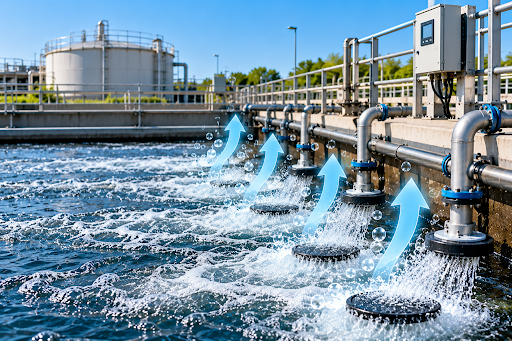
There are various oxygen delivery technologies with various benefits. Conventional aeration systems are those that feed air into the system by means of diffusers or mechanical devices. But for some applications, other oxygen transfer options may be more suitable.
Puroxi offers water treatment technologies that may be used to assist in oxygenation and wastewater process management, depending on site conditions.
Relevant products include:
- Puroxi Nano Bubble Nozzles: These are nozzles that are designed to inject a specific gas into the flowing water by means of a special mixing process. They can be used for oxygen transfer if system hydraulics and treatment objectives deem them appropriate.
- Puroxi Oxygen Generator: This is an oxygen generator based on pressure swing adsorption (PSA) technology that provides oxygen at the point of use for water treatment applications that are compatible with the PSA technology.
- Puroxi Oxygen Booster: This product is suitable for controlled water treatment applications where its operating requirements and treatment objectives are suitable.
These products are not interchangeable solutions and should not be used for the same purpose. They are suitable depending on the oxygen requirement, wastewater composition, transfer efficiency and equipment configuration.
Why Monitoring Matters for Long-Term Odor Control
Oxygenation must be continually checked to be effective. The composition and flow of wastewater may vary during the day, and seasonal temperatures may affect microbial activity. Measurable performance targets should be set and regularly reviewed by facilities. Useful indicators include:
- Levels of dissolved oxygen and dissolved sulfide.
- Hydrogen sulfide levels in appropriate areas.
- Wastewater flow and organic loading.
- Energy use and equipment efficiency.
- Complaints of odors and overall treatment results.
Importantly, oxygenation may need to be used in conjunction with other treatments, such as chemical dosing, sludge removal, gas-phase filtration or ventilation. Hydrogen sulfide is also poisonous at high levels. Proper gas monitoring, ventilation and confined space safety practices are to be followed by workers. Do not use the smell to decide if an area is safe.
Wastewater odor control is more than just masking unpleasant odors. The biological and chemical conditions which produce them must be dealt with by the facilities. Oxygenation can be used to help reduce some odor-producing processes, to promote aerobic treatment and to stabilize a wastewater system.
The most effective treatment will depend on the site conditions, water chemistry, and measurable treatment goals. Puroxi can assist facilities in assessing appropriate oxygenation technologies and create a viable water treatment plan. Contact with Puroxi and discuss about your wastewater issues and how it can help you find a solution for your facility.
Frequently Asked Questions
The rotten-egg smell usually comes from hydrogen sulfide, which forms when certain microorganisms break down sulfur compounds under oxygen-depleted conditions. Accumulated sludge, stagnant wastewater, and inadequate treatment can increase its production and create persistent odor problems.
Oxygenation increases dissolved oxygen, supporting aerobic microorganisms and discouraging some anaerobic processes responsible for odor formation. It can also help oxidize dissolved sulfides under suitable conditions. Effectiveness depends on oxygen transfer, wastewater chemistry, and proper system operation.
Oxygenation can reduce odors associated with oxygen-depleted conditions, but it cannot eliminate every odor source. Ammonia, volatile organic compounds, sludge accumulation, and industrial chemicals may require additional controls. Accurate diagnosis helps determine the most appropriate treatment combination.
Wastewater treatment plants, pumping stations, pipelines, equalization tanks, and certain industrial wastewater systems may benefit from oxygenation. However, suitability depends on wastewater characteristics, flow patterns, oxygen demand, and existing treatment processes. A site-specific assessment helps establish requirements.
Facilities can monitor dissolved oxygen, dissolved sulfide, hydrogen sulfide emissions, and operational conditions. They should also track odor complaints, energy consumption, and treatment results. Comparing baseline measurements with subsequent results helps determine whether oxygenation delivers meaningful improvements.