Puroxi Knowledge Centre
Nanobubbles for Aquaculture: Improving Dissolved Oxygen in Fish Farming
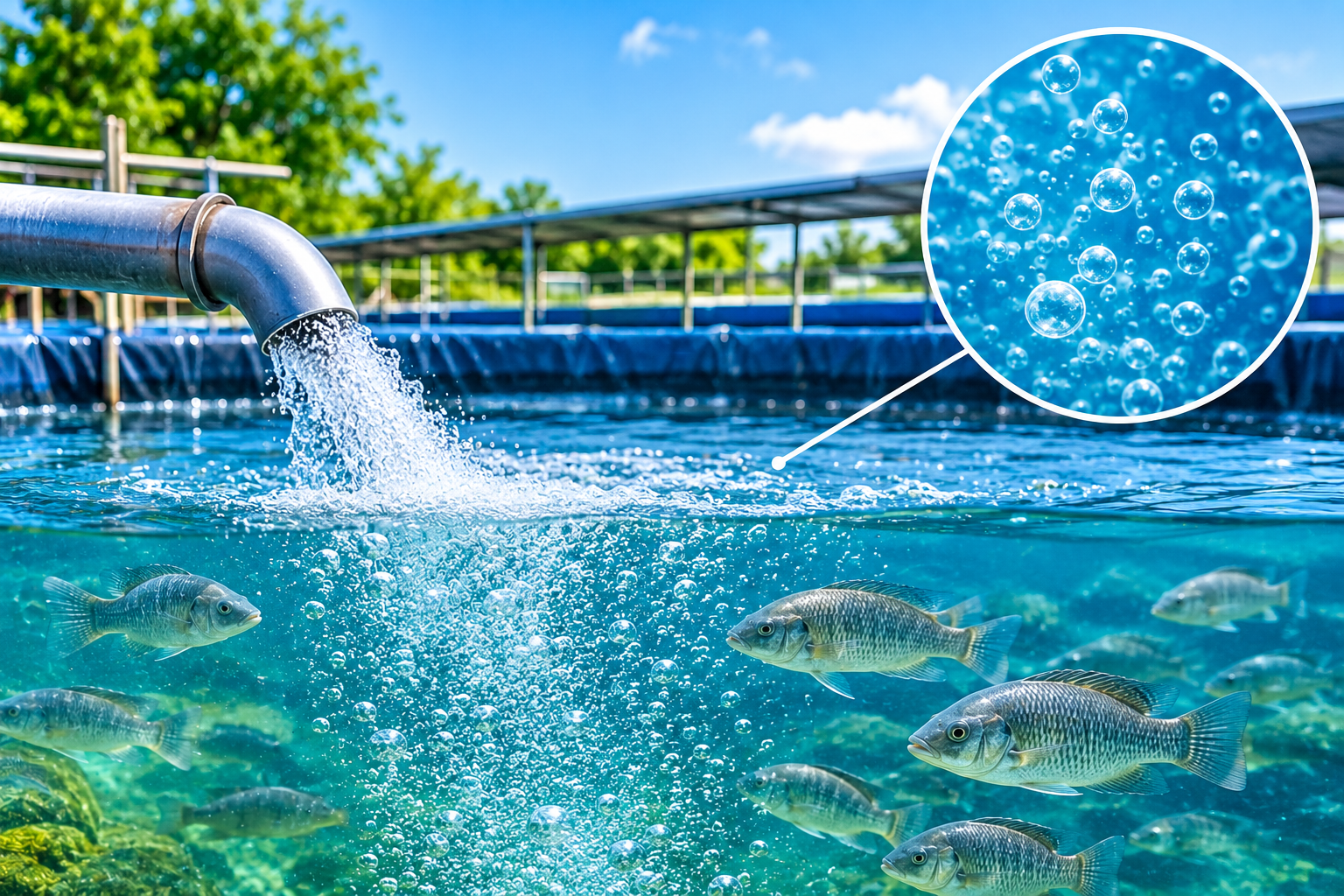
For many fish farms, maintaining healthy water conditions is essential. When the fish population is too high and the water temperature is high, uneaten feed and organic wastes can, however, lower the dissolved oxygen. In the absence of sufficient oxygen, fish may become stressed, less competitive for food, grow more slowly, and face an increased risk of mortality.
So, good oxygen management is crucial to sustainable and profitable aquaculture. A second method to enhance oxygen transfer and water quality is through the use of nanobubble technology. This technology can be used to introduce very small gas bubbles into the water, which can aid in more effective management of dissolved oxygen when designed appropriately for fish systems.
Why Is Dissolved Oxygen Important in Fish Farming?
Dissolved oxygen (DO) can be found in the water, which is used by fish and other aquatic organisms for respiration. Good oxygen also promotes the growth of useful bacteria, which will break down organic wastes.
But dissolved oxygen can be reduced in aquaculture systems due to several factors:
- High stocking density: The more fish, the higher the oxygen consumption.
- Warmer water: Less dissolved oxygen with warmer water.
- Organic wastes: Uneaten feed and fish wastes produce increased microbial oxygen demand.
- Poor water circulation: Dead spots may have hazardous oxygen depletion.
- Algal activity: Oxygen may be depleted prior to sunrise due to respiration at night.
As a result, it is necessary for farmers to take dissolved oxygen readings regularly and make necessary changes in their aeration machines based on the species of fish, fish stocking density, environment, etc.
Nanobubble Technology: What Is It?
Nanobubbles are very small gas bubbles that are less than 200nm in diameter. They are small in size and therefore have different physical properties than traditional aeration bubbles. Nanobubbles can stay suspended in water longer than larger bubbles, which will rise and burst at the water’s surface. This trait can be used to assist in gas transfer and oxygen distribution in suitably designed aquaculture systems.
Typically, a nanobubble system is used to inject gas into a water stream with the help of a specific device. The treated water is returned to the fish tank/pond or recirculating aquaculture system. The technology can be used for oxygenation, but it does not require the use of diffused air aeration exclusively.
How Nanobubbles Improve Dissolved Oxygen in Aquaculture
Nanobubble technology can be used to enhance the transfer of gases and contribute to the maintenance of adequate water conditions during fish farming. It is influenced with the oxygen supply, water circulation, the system design, and the oxygen demand of the fish.
-
Supports More Effective Oxygen Transfer
Nanobubbles are bubbles that have a large gas-water interface area relative to their volume. This property can be utilized in the transfer of oxygen under appropriate conditions.
Potential benefits include:
- Enhancing the supply of oxygen to water.
- Improving the dissolved oxygen levels.
- Use of existing aeration equipment.
- Assisting farmers in intensive systems with oxygen demand.
Actual performance is dependent on water chemistry, temperature, salinity and equipment configuration. The improvement should be confirmed by use of dissolved oxygen measurements rather than assuming that nanobubbles automatically increase oxygen levels on the farm.
-
Provides fish health & growth
Fish require sufficient oxygen for proper metabolism, feeding activity and growth. Fish can become stressed and eat less if oxygen levels are low.
Nanobubble systems can contribute to the development of a more balanced aquatic environment by providing appropriate oxygen levels. Still, there are a number of factors that improve growth, such as nutrition, stocking density, and disease control and water quality.
-
Helps Maintain Water Quality
Organic wastes can impact oxygen requirements and microbial activity in aquaculture water. Oxygenation can contribute to aerobic biological and organic matter breakdown and biological filtration. This is especially true for recirculating aquaculture systems (RAS), where water is continuously filtered and treated.
Ammonia, nitrite, pH and other water quality parameters should still be monitored by the farmer. Nanobubble oxygenation is not a substitute for filtration, waste removal or proper biosecurity measures.
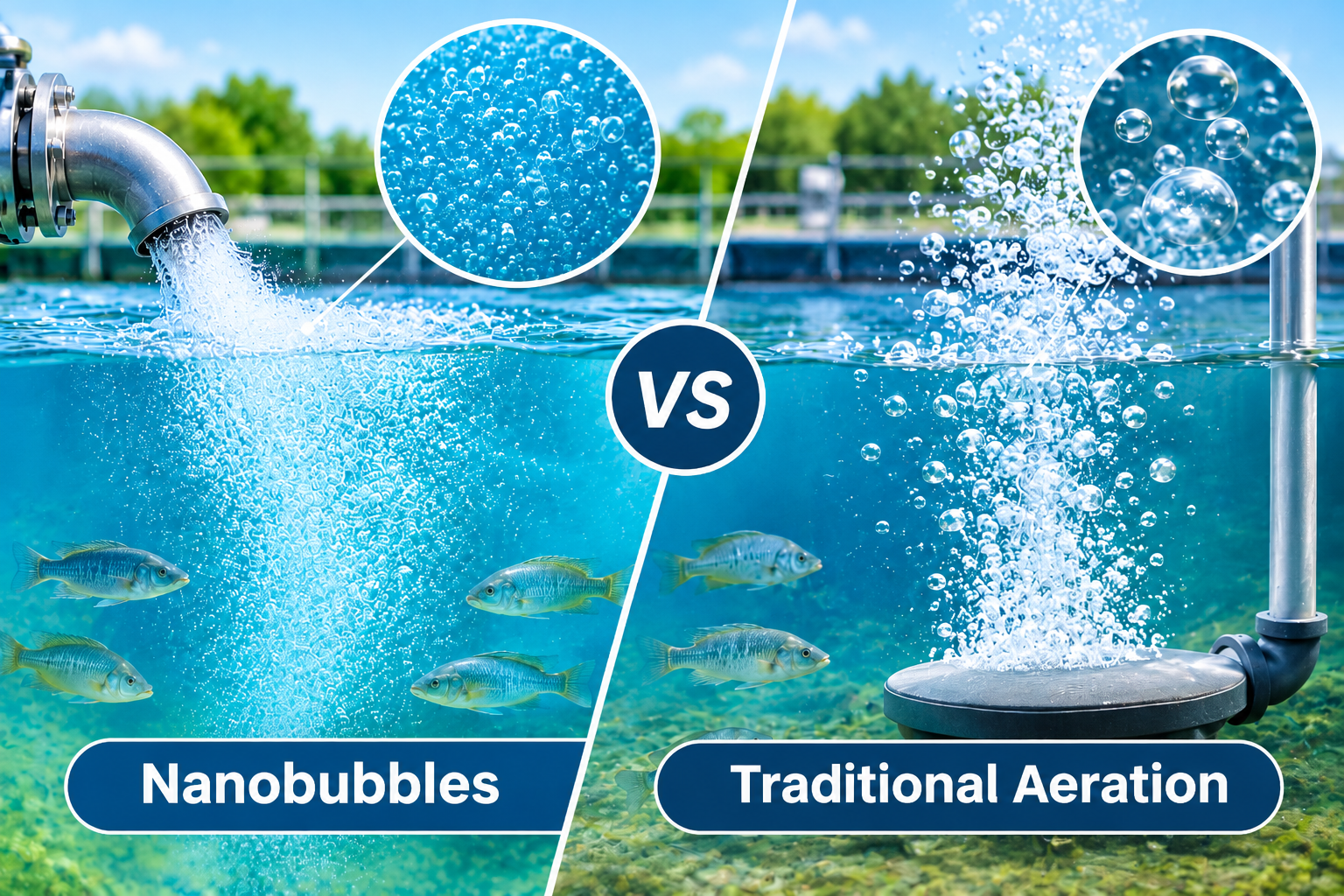
Nanobubbles vs. Traditional Aeration
Older aeration systems continue to be useful on many fish farms, such as paddlewheel aerators and diffused-air systems. A new method of gas transfer is presented here, using nanobubble technology.
- Traditional aeration: Provides mixing and transfer of oxygen by either surface agitation or rising bubbles.
- Nanobubble systems: Produce very small bubbles, which can be dispersed for a longer time in favorable conditions.
- Combined systems: Can use nanobubble equipment as well as conventional aeration equipment for circulation and emergency oxygenation.
Selection depends on the size of the farm, water depth, type of fish, and cost of energy and oxygen requirements. Farmers should also keep backup aeration or emergency oxygen supplies in place wherever it might become a problem if oxygen is lost and compromises fish stocks.
How Puroxi Technologies Can Support Fish Farming
Puroxi has developed water treatment technologies which can contribute to oxygen management in aquaculture applications.
Relevant options include:
Puroxi Nano Bubble Nozzle: Generates nanobubbles by introducing oxygen supplied by the Puroxi Oxygen Generator through the nozzle’s designated gas inlet ports, allowing oxygen-rich nanobubbles to be dispersed throughout the water.
Puroxi Oxygen Generator: Our oxygen generator utilizes advanced Pressure Swing Adsorption (PSA) technology to produce oxygen at a purity of approximately 93% ± 3%. This provides a reliable, continuous supply of concentrated oxygen for efficient integration with Puroxi Nano Bubble technology, helping improve dissolved oxygen levels and support water treatment applications.
Puroxi technologies can be considered for applications in ponds, lakes, ocean marinas, water storage tanks, hatcheries, recirculating aquaculture systems (RAS), wastewater treatment, and drinking water systems. Each application is assessed through a site-specific evaluation to determine the most suitable technology or combination of technologies based on water quality, operating conditions, and treatment objectives.
Prior to installation, assess water flow, oxygen requirements, stocking density, energy requirements, and existing aeration equipment. Proposed systems can be pilot-tested to determine if the system provides measurable benefits in real farm situations.
Best Practices for Using Nanobubbles in Aquaculture
For successful outcomes, nanobubble technology should be integrated into a farmer’s water management plan.
- Monitor Dissolved Oxygen (DO) Levels Regularly: Measure dissolved oxygen levels at different depths, particularly before sunrise and during hot weather. Oxygen levels are typically lowest before sunrise because plants, algae, and microorganisms consume oxygen throughout the night without photosynthesis replenishing it. During hot weather, warmer water holds less dissolved oxygen while biological activity and oxygen demand often increase. Measuring at different depths is equally important, as deeper water may contain significantly less oxygen due to thermal stratification and limited water circulation. Regular monitoring helps identify oxygen deficiencies early, protect aquatic life, and determine when additional oxygenation or water treatment may be required.
- Monitor water quality parameters: Record ammonia, nitrite, pH, temperature and other parameters as they relate to water quality.
- Check equipment: Examine generators, pumps, pipes and oxygen supply equipment.
- Control stocking rate: Maintain a balance between fish density and oxygen availability and treatment capacity.
- Be ready for emergencies: Have backup aeration systems and alarms to deal with equipment failures.
These practices allow farmers to assess the performance of their systems and ensure fish health and stable production conditions.
Nanobubbles have the potential to enhance oxygen transfer and water quality for fish culture. They can work alongside appropriate aeration, monitoring, filtration and stocking practices to contribute to healthier growing environments for aquaculture operators.
However, results depend on individual farm conditions, and no single technology replaces comprehensive water management. Puroxi can help aquaculture operators explore suitable nanobubble and oxygen generation technologies for their specific needs. Contact Puroxi to discuss your water quality challenges and identify potential solutions for your fish farming operation.
Frequently Asked Questions
Nanobubbles are extremely small gas bubbles that can remain dispersed in water longer than conventional bubbles under suitable conditions. In aquaculture, specially designed systems use them to support oxygen transfer, improve dissolved oxygen management, and complement existing water treatment practices.
Nanobubble systems introduce gas into water through specialized equipment. Their large interfacial area can support gas transfer under suitable operating conditions. Actual dissolved oxygen improvements depend on oxygen supply, water chemistry, circulation, temperature, and the system’s overall oxygen demand.
Nanobubbles may support fish growth by helping maintain adequate dissolved oxygen levels. Sufficient oxygen supports normal metabolism and feeding activity. However, growth also depends on nutrition, genetics, stocking density, disease prevention, and water quality, so results vary between farms.
Nanobubbles offer different gas-transfer characteristics from traditional aeration, but they are not universally better. Performance depends on farm conditions, equipment costs, energy requirements, and oxygen demand. Some operations may benefit from combining nanobubble technology with conventional aeration systems.
Puroxi offers nanobubble generators and oxygen generation equipment for suitable water treatment applications. Their suitability depends on farm design, oxygen requirements, water chemistry, and equipment configuration. Consult Puroxi for a site-specific assessment before selecting a system.