Puroxi Knowledge Centre
Marina Algae Treatment: A Practical Guide to Cleaner Waterfronts
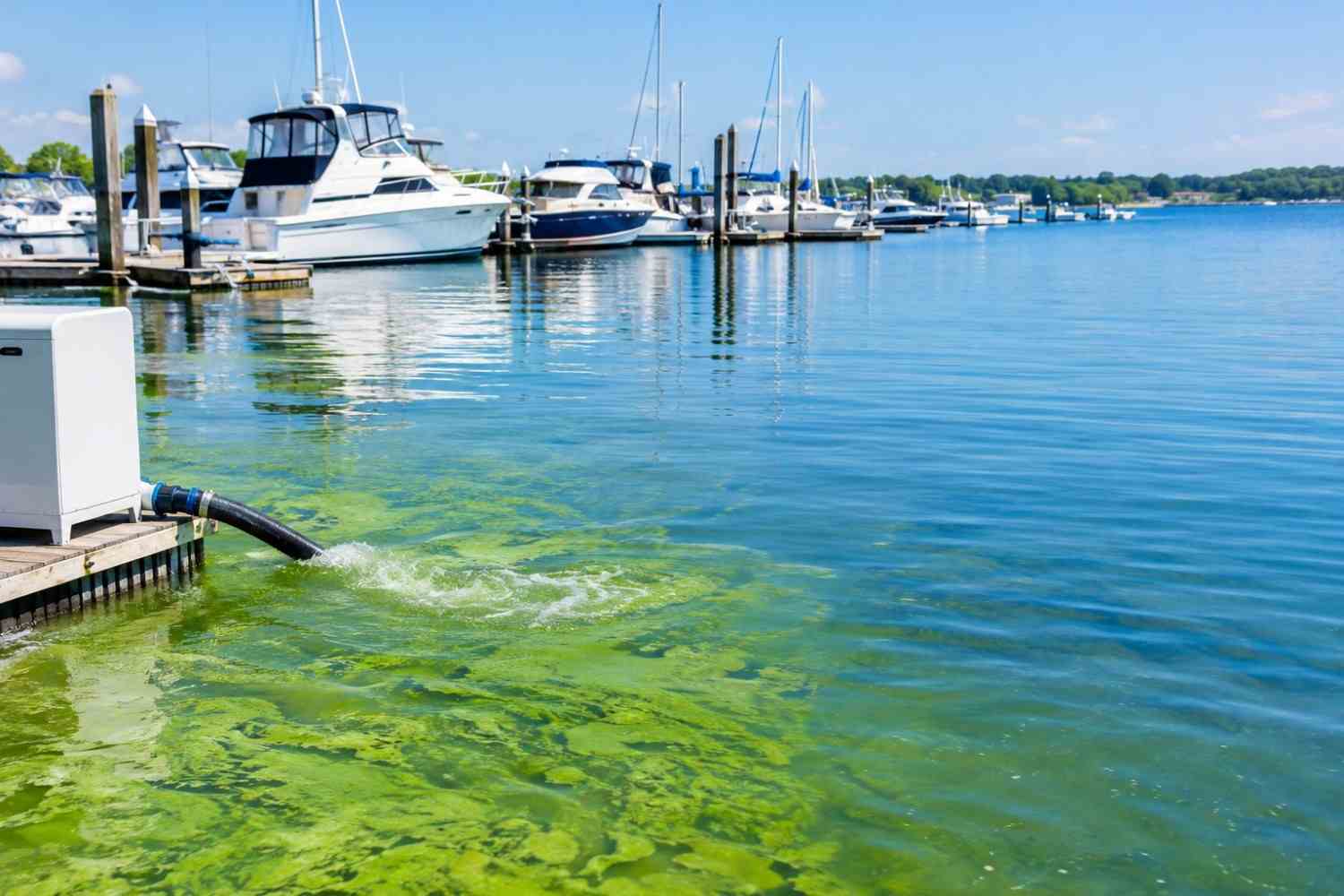
Marinas face unique water-quality challenges. Unwanted algae growth can be encouraged by boats, docks, limited circulation, sunlight, nutrients and organic debris. The first steps in a well-designed marina algae treatment program should be to assess the water, identify algae, review circulation and continually monitor.
Why does algae grow around marinas?
Algae easily multiply when water is stagnant and excess nutrients are added to it. Favorable conditions include warm temperatures, decomposing organic matter, runoff, and wastewater. This means that it is necessary to find the proper treatment for the marine algae for each water body rather than a standard solution for all.
Common warning signs include:
- Green films across dock areas
- Floating or suspended algae
- Slippery surfaces and biofilm
- Unpleasant odors
- Reduced water clarity
- Recurring growth near poorly circulated areas
Start With Site Assessment
The first step to effective marina algae treatment is to know the site. Technology selection can be impacted by water depth, salinity, temperature, dissolved oxygen, nutrient concentrations, water movement and type of algae.
This is also important when treating algae in marine aquaria. The volume, filtration, species and water chemistry of aquariums vary. Hence, livestock, filtration, salinity and the type of algae should be taken into account when treating algae in marine aquariums.
Ultrasonic Technology for Suitable Applications
Selected marina environments can benefit from ultrasonic algae control. Puroxi’s Quattro DB systems are intended for ideal algae-management applications with algae, biofilm, diatoms and cyanobacteria.
The final system will depend on algae identification, depth, geometry, nutrient loading, water movement, aquatic life and desired levels of control. Thus, marine algae treatment should be decided after testing and covering an area assessment and not just by surface area.
Managing Hair Algae in Marine Settings
Filamentous and/or hair-like algae may cause a persistent problem, both visually and in terms of maintenance. But there are a lot of differences in hair algae treatment in marine use between aquariums, lagoons, docks and natural seawater systems.
A suitable marine green hair algae treatment strategy should consider:
- Algae identification
- Light exposure
- Nutrient availability
- Water circulation
- Organic loading
- Existing filtration
- Aquatic species and habitat
In marine aquariums, marine green hair algae treatment may require careful nutrient management and filtration alongside other interventions. Similarly, hair algae treatment marine programs should reflect the actual environment rather than use the same approach everywhere.
Nano-Bubbles for Oxygenation and Water Movement
Water movement and gas transfer can be used to aid with broader water-quality management. Puroxi Nano Bubble Nozzles are specifically engineered for use in application-specific gas transfer, circulation and oxygenation systems.
The design of a nano bubble can assist in oxygen transfer and water transfer. If appropriate, other marine algae treatments can be combined with circulation to develop a more comprehensive water management program.
Treatment equipment for marine plants should be matched to the flow, pressure, gas needs, water chemistry and treatment goals.
What about Marine Diesel Algae Treatment?
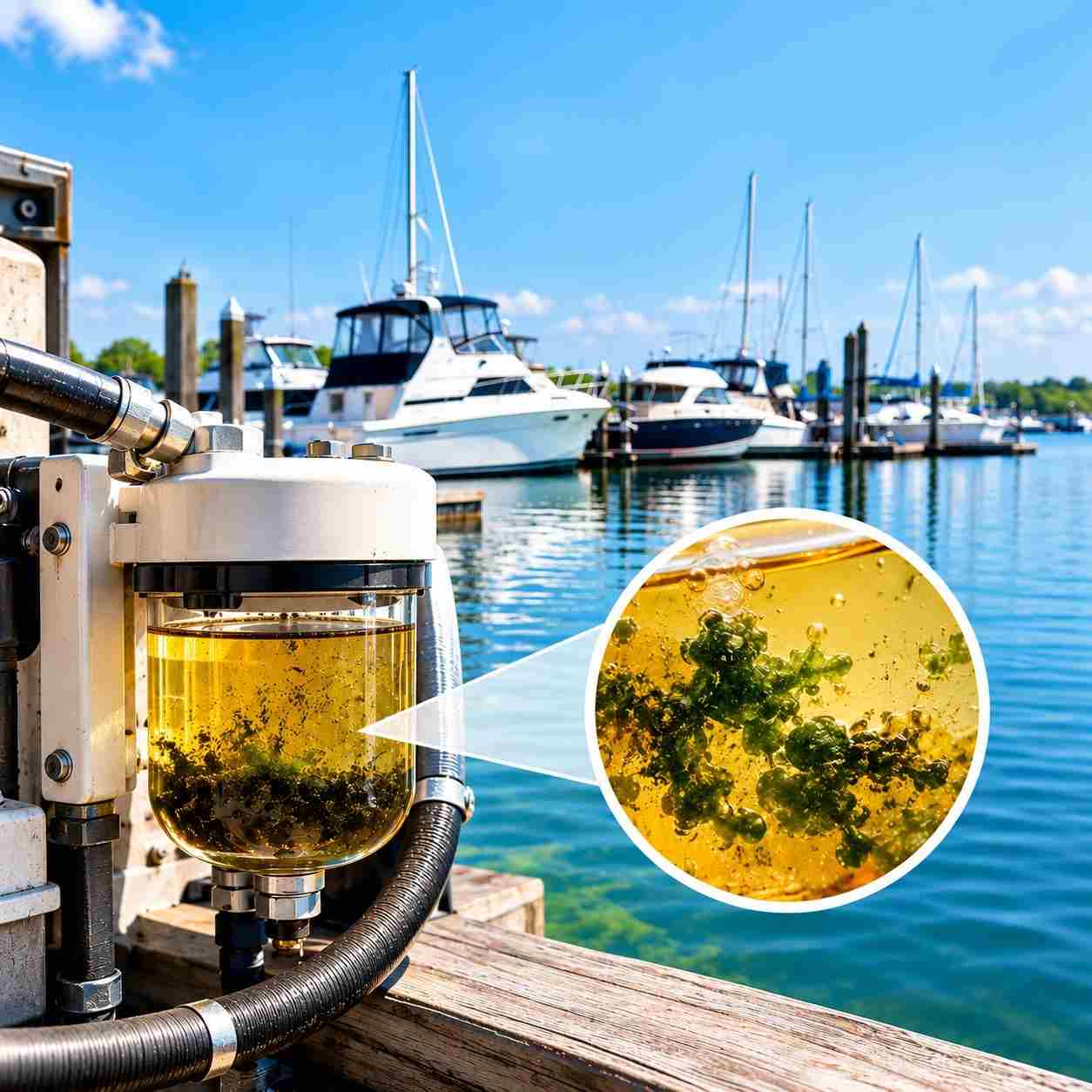
Typically, the term marine diesel algae treatment is used for microbial contamination/sludge issues involving diesel fuel tanks. This differs from algae growing in marina water.
A separate assessment is necessary to address the problems of fuel contamination, fuel system, tank conditions, water contamination, fuel filtering, and the proper fuel handling procedures.
Marine diesel algae treatment is not to be taken as marine water algae control. Likewise, an open water algae-control device does not necessarily deal with marine diesel algae treatment.
Build a Monitoring Program
Any treatment of marina algae should be coupled with baseline measurements and follow-up observations. Monitoring helps the operator to be aware of changes in conditions and whether the chosen strategy is appropriate.
Track factors such as:
- Water temperature
- Dissolved oxygen
- Salinity and conductivity
- pH and oxidation-reduction potential
- Turbidity and water clarity
- Algae type and coverage
- Seasonal bloom patterns
A monitoring-based strategy also improves marine aquarium algae treatment decisions by providing measurable information about changing water conditions.
Choosing the Right Technology
There is no one-size-fits-all solution for marina algae control. Different solutions may be required in a marina with poor circulation as compared to a sheltered basin that contains areas that do not circulate. Similarly, while treating algae in an aquarium, the marine environment needs a much more controlled environment.
Puroxi offers several technologies that may support suitable applications:
- Quattro DB Ultrasonic Algae Control
- Puroxi Nano Bubble Nozzles
- Puroxi Oxygen Generator
These systems are not interchangeable and have different uses. Puroxi focuses on the need for application-specific selection, dependent on water conditions, flow, water volume, existing infrastructure and treatment objectives.
Addressing Recurring Hair Algae Problems
The first step of a practical hair algae treatment marine program is to determine why it is growing. Recurrent issues can be caused by nutrient inputs, stagnant areas, sunlight, organic accumulation and circulation.
Similarly, for the treatment of marine green hair algae, the treatment should be tailored to the target organism and site conditions. In aquariums, marine aquarium algae treatment can include the use of filters and nutrient manipulation. Marina operators can assess circulation, oxygenation, monitoring and appropriate algae-control technologies.
The goal isn’t just to get rid of algae that’s visible. Rather, marine algae treatment needs to be targeted towards water conditions, measurable outcomes, operational needs, and long-term management.
A Smarter Approach to Marina Water Management
Algae treatments in marinas must be more than just a visible treatment. Site assessment, algae identification, water-quality monitoring, and technology to be used for the specific environment.
In the meantime, for treatment of hair algae in marine environments with a waterfront, there are differences to be considered with respect to the enclosed aquarium. When designed to reflect local water conditions, a well-designed marine green hair algae treatment strategy can help in better treatment.
For fuel-related concerns, marine diesel algae treatment requires a separate fuel-system assessment rather than an open-water algae strategy. Ultimately, the right approach depends on water chemistry, biology, circulation, equipment, and operational goals.
Selecting an appropriate marina algae treatment strategy can help alleviate the problematic algae from the marina more methodically. Marine algae treatments should always be based on the algae and conditions present in marine facilities, aquariums and appropriate waterfront applications.
For customized water-treatment guidance and suitable algae-control technologies, contact Puroxi today.
FAQs
Marina algae treatment combines testing, algae identification, circulation management, monitoring, and suitable control technologies responsibly.
Marine aquarium algae treatment requires consideration of livestock, salinity, filtration, volume, lighting, and nutrient conditions.
Marine green hair algae treatment considers algae identification, nutrients, lighting, circulation, filtration, and site conditions.
Marine diesel algae treatment addresses fuel-system contamination, differing from algae management in marina water today.
Puroxi provides ultrasonic algae control, nano-bubble, oxygen-generation, monitoring, and customized water-treatment technologies for suitable applications.