Puroxi Knowledge Centre
Preventing Legionella in Cooling Towers: Best Practices for Water System Safety
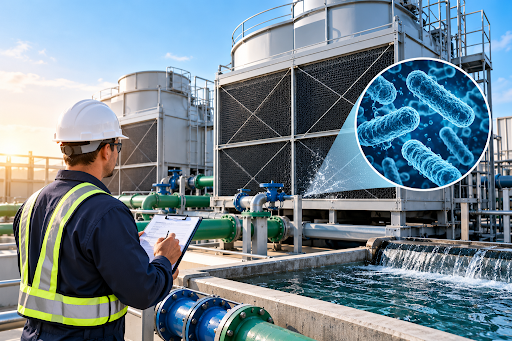
Cooling towers are a vital part of commercial buildings, manufacturing facilities, hospitals and industrial operations. However, poorly maintained cooling systems can create conditions that allow Legionella bacteria to grow. These bacteria can lead to Legionnaires’ disease, a form of severe pneumonia which is contracted by inhaling contaminated water droplets.
Thus, water treatment, periodic inspections, efficient disinfection and monitoring are essential to prevent Legionella in cooling towers. The facility’s management team needs to address the potential risks before they become a threat to the health of the employees and cause any disruption of operations. A water management plan can help businesses to ensure that water systems are safe and that cooling systems operate effectively.
Why Is Legionella Prevention Important in Cooling Towers?
Cooling towers are used to evaporate warm water to remove heat. Unfortunately, these conditions can provide a favorable environment for bacteria to grow when operators don’t pay attention to water quality or maintenance.
Legionella is particularly problematic when contaminated water is aerosolized and spread through the air. The droplets may contain harmful bacteria and be inhaled by people nearby without them knowing.
Common risk factors are:
- Warm water temperatures: Legionella can grow in certain temperature ranges.
- Accumulation of biofilm: Bacteria can survive in protective layers of microorganisms and organic material.
- Scale and sediment: Deposits form surfaces on which bacteria can survive.
- Low water flow: Stagnant water can promote microbial growth.
- Inadequate disinfection: Improper treatment levels can result in the growth of bacteria.
- Poor maintenance: Maintenance of basins, piping and drift eliminators can be poor, resulting in increased exposure risks.
Therefore, facility managers need to consider Legionella prevention as a continuous safety duty, not just a maintenance chore.
Best Practices for Legionella in Cooling Towers
-
Develop a Comprehensive Water Management Plan
A documented water management plan sets out responsibilities, procedures and monitoring requirements. It also aids facility staff in determining conditions that may promote the growth of Legionella.
A good plan will contain:
- Recognize cooling towers and other equipment that may generate aerosols.
- Evaluate conditions that might permit the growth of bacteria.
- Set up proper control measures and operating limits.
- Designate duties to qualified staff.
- Inspection of documents, treatment activities and test results.
- Establish corrective actions for control failures.
Also, review the plan whenever there are changes to the equipment, operating conditions, or monitoring indicates a possible problem. Adhere to applicable standards and accepted guidance, such as CDC recommendations.
-
Maintain Effective Water Treatment and Disinfection
Water treatment is a critical part of the safety of a cooling tower. The appropriate treatment program can control microorganisms and minimize corrosion, scale and deposits.
Facility operators should:
- Use an appropriate, professionally designed biocide program.
- Check disinfectant residual as needed for treatment.
- Monitor pH and other water chemistry parameters on a regular basis.
- Maintain suitable blowdown and makeup-water controls.
- Test treatment equipment for proper functioning.
- Investigate water quality changes that are not expected.
Importantly, operators should never presume that clear looking water is microbiologically safe. Legionella can survive even in clean looking water. Similarly, chemical treatments will not provide 100% protection. Disinfection should be combined with the cleaning, monitoring and water management plan.
-
Clean Cooling Towers and remove Biofilm
Regular cleaning is necessary as the microorganisms can survive disinfectants if they are in the form of biofilm. Water treatment can also be hindered by sediment and organic matter.
To minimize these risks:
- Check cooling tower basins, fill materials and distribution systems.
- Dispose of sediment, organic material and dirt.
- Use approved procedures to clean accessible surfaces.
- Check drift eliminators for damage and excessive deposits.
- Use professional cleaning and disinfection procedures.
- Maintain records for future inspection.
Plan cleaning for system conditions, risk assessments and applicable requirements. In addition, the trained personnel should take appropriate precautions as cleaning activities may result in exposure to treatment chemicals and contaminated aerosols.
-
Keep track of water quality and test for Legionella
Facility staff can identify issues before they get out of hand with regular monitoring. But, visual examination does not confirm the presence of Legionella.
A monitoring program should include:
- The temperature and flow of the water.
- Residuals and pH of disinfectants.
- Conductivity, scale formation and sediment accumulation.
- Equipment performance and treatment-system operation.
Testing of water for Legionella as required by the water management plan, risk assessment or regulations.
Employ qualified laboratories and validated sampling procedures. Also, look into any unusual results immediately. If Legionella is detected, or control measures are ineffective, adhere to the response plan and consult water treatment and public health specialists for advice.
-
Control Water Stagnation and Aerosol Exposure
Poor circulation can cause stagnant areas that may be more difficult to control. In the meantime, cooling tower drift can be responsible for the spread of contaminated droplets outside of the cooling tower.
Reduce these risks by:
- Ensuring adequate water flow in the system.
- Improving dead legs and poorly circulated sections, if possible.
- Checking and repairing drift eliminators.
- Equipment maintenance in accordance with manufacturer’s guidelines.
- Managing shutdowns and restarts with documented procedures.
In maintenance, refrain from practices that are likely to create unnecessary aerosols. Should the facility suspect contamination, limit access as needed and adhere to professional advice prior to re-starting any contaminated equipment.
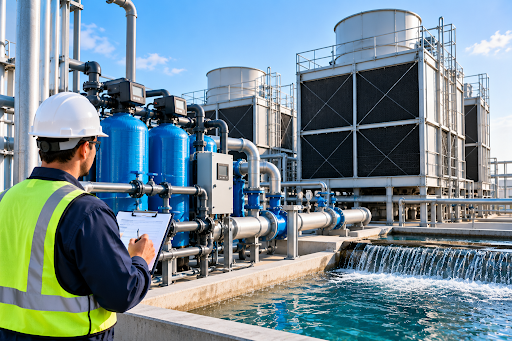
How Advanced Water Treatment Can Support Cooling Tower Safety
Operators can use water treatment technologies to solve certain operating problems, but must choose the technology based on the actual water condition and the needs of the system.
For instance, Puroxi has a number of technologies that can contribute to a more comprehensive cooling water management strategy:
- Puroxi Oxygen Booster: A controlled-treatment product which can be used if water testing and a qualified treatment protocol determine its suitability.
- Puroxi Nano Bubble Nozzles: These are suitable for gas transfer applications when the system design and water chemistry allows.
- Puroxi Ultrasonic Descaler: The technology can be used to assist with scale management in appropriate applications, allowing the operator to deal with deposits that impact equipment performance.
The technologies are not interchangeable and have different uses. They are appropriate for water chemistry, hydraulic conditions, equipment compatibility and treatment objectives. For more information, click here
Build a Reliable Cooling Tower Safety Routine
The more consistent, the better Legionella prevention works. Daily operating checks, scheduled inspections, proper laboratory testing, and documented corrective actions should be performed in conjunction with one another by facility managers.
Educate train maintenance staff on warning signs and reporting abnormal conditions. Maintain treatment records, ensure monitoring instruments are functioning properly and review performance trends frequently.
Finally, establish clear escalation procedures for failed controls, suspected contamination, and positive Legionella results. Prompt, coordinated action helps protect people while supporting dependable cooling operations.
For facilities seeking better water quality and more reliable cooling system performance, Puroxi can help evaluate suitable water treatment technologies based on site conditions and treatment objectives. A site-specific assessment provides a practical starting point for strengthening an existing water management strategy.
Frequently Asked Questions
Legionella can multiply when cooling towers contain warm water, biofilm, sediment, and inadequate disinfection. Poor circulation and inconsistent maintenance can increase risks. Regular inspections, suitable treatment, and documented water management procedures help facilities control these conditions and protect public health.
Cleaning frequency depends on system design, operating conditions, contamination risks, and applicable regulations. Facilities should follow their documented water management plan and professional recommendations. Inspect equipment regularly, remove deposits when necessary, and perform cleaning and disinfection using appropriate safety procedures.
Chemical treatment helps control Legionella when operators select and maintain an appropriate disinfection program. However, no single treatment guarantees complete protection. Biofilm, poor circulation, and treatment failures can undermine effectiveness. Combine disinfection with monitoring, cleaning, testing, and corrective actions.
Yes. Cooling towers can release contaminated water droplets into surrounding air. People may inhale these aerosols, potentially developing Legionnaires’ disease. Proper treatment, maintenance, drift control, and risk-based monitoring help reduce exposure. Suspected outbreaks require prompt coordination with public health authorities.
Advanced water treatment technologies can support specific water quality objectives when properly selected. However, their effectiveness against Legionella depends on the technology and validated application. Facilities must maintain required disinfection, microbiological testing, and a comprehensive water management program.