Puroxi Knowledge Centre
Preventing Algae Blooms Naturally: Sustainable Water Treatment Without Harsh Chemicals
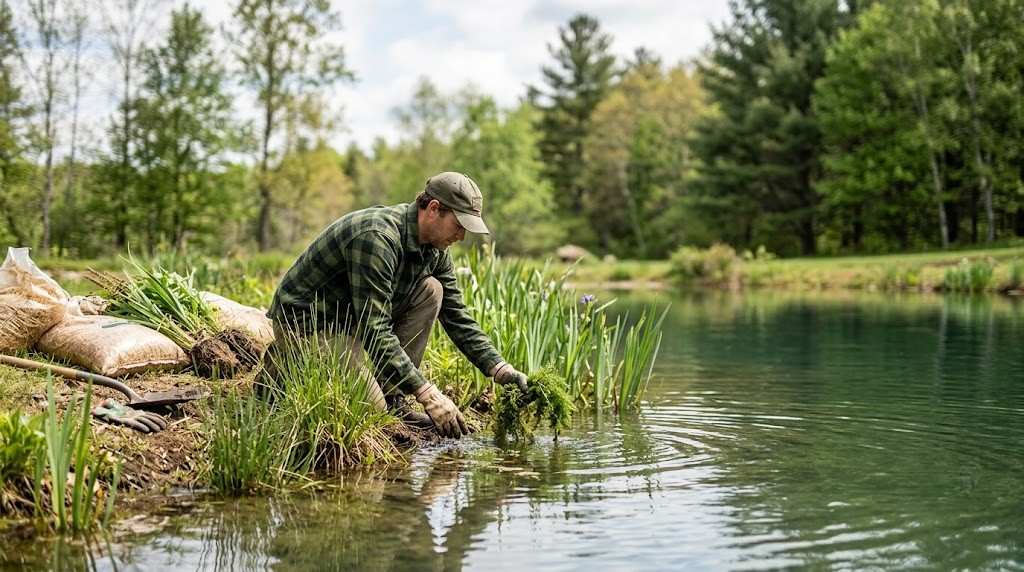
Algae can be a problematic water quality issue in ponds, reservoirs, lagoons, industrial systems, and water bodies in general. Excessive algae growth can lead to poor water transparency, odors, maintenance issues, and impacts on aquatic life.
Traditional methods of controlling algae involve chemical materials. But repeated chemical use may not be applicable to all applications. There is an increasing interest among water managers in methods that minimize reliance on chemicals while achieving good algae control.
Fortunately, there are modern water-treatment technologies offering alternative solutions. These methods are aimed at understanding the water, determining the causes of algae, and choosing the appropriate method of treatment.
Puroxi says, “Begin with the water issue instead of picking a product first. The type of solution depends on water conditions, operating requirements, treatment objectives, and existing infrastructure.
Understanding Natural Algae Control
The first step to controlling algae naturally is to figure out what is making it grow. The algae require proper lighting, nutrient conditions, temperature, water circulation, and other environmental factors.
Algae may only be a symptom of a larger problem and can be treated only if it is visible. Thus, water managers should consider the overall water environment.
Important factors include:
- Water temperature
- Nutrient levels
- Water depth
- Sunlight exposure
- Water movement
- Dissolved oxygen
- Algae species
- Organic accumulation
- Seasonal changes
- Existing treatment methods
Monitoring these factors can help operators recognize changing conditions before algae growth becomes difficult to manage.
Puroxi recommends gathering site information and testing relevant water-quality parameters before selecting treatment equipment. Depending on the application, monitoring may include temperature, dissolved oxygen, pH, conductivity, turbidity, salinity, nutrients, and algae identification.
Why Algae Bloom Prevention Matters
Algae bloom prevention can be more practical than waiting for severe growth and then attempting rapid removal. Blooms can develop quickly when environmental conditions favor algae. Therefore, regular monitoring can help operators identify changes early.
A proactive strategy may include:
- Regular water-quality testing
- Algae identification
- Nutrient monitoring
- Improved circulation
- Oxygen management
- Reduced organic accumulation
- Continuous water-quality monitoring
- Appropriate algae-control technology
This approach helps operators understand changing water conditions. It also allows treatment strategies to change when site conditions change.
Chemical-Free Algae Treatment Options
The goal of chemical-free algae treatment is to manage algae without routinely introducing algaecides into the water.
One technology used for suitable applications is ultrasonic algae control. Puroxi’s Quattro DB systems use programmed ultrasonic frequencies to target suitable algae, cyanobacteria, biofilm, and diatoms. Technology aims to interfere with algae buoyancy, moving susceptible algae away from the lighted upper water column where photosynthesis can occur.
However, ultrasonic treatment is not a universal solution. The appropriate frequency selection and system configuration depend on factors such as:
- Algae identification
- Water-body geometry
- Water depth
- Nutrient conditions
- Water movement
- Seasonality
- Aquatic life
- Desired control level
Therefore, identifying the target algae remains important before selecting an ultrasonic system.
Benefits of Reducing Chemical Dependence
Reducing chemical inputs can provide several operational and environmental advantages when the application is suitable.
Potential benefits include:
- Less routine chemical dosing
- Reduced chemical storage requirements
- Lower chemical handling needs
- Continuous treatment capability
- Reduced dependence on repeated applications
- A non-invasive treatment approach
- Potential integration with monitoring systems
Puroxi describes its ultrasonic algae-control technology as a chemical-reduction approach. Its systems can operate continuously and may be combined with separately designed oxygenation, circulation, or biological strategies.
How Ultrasonic Algae Treatment Works
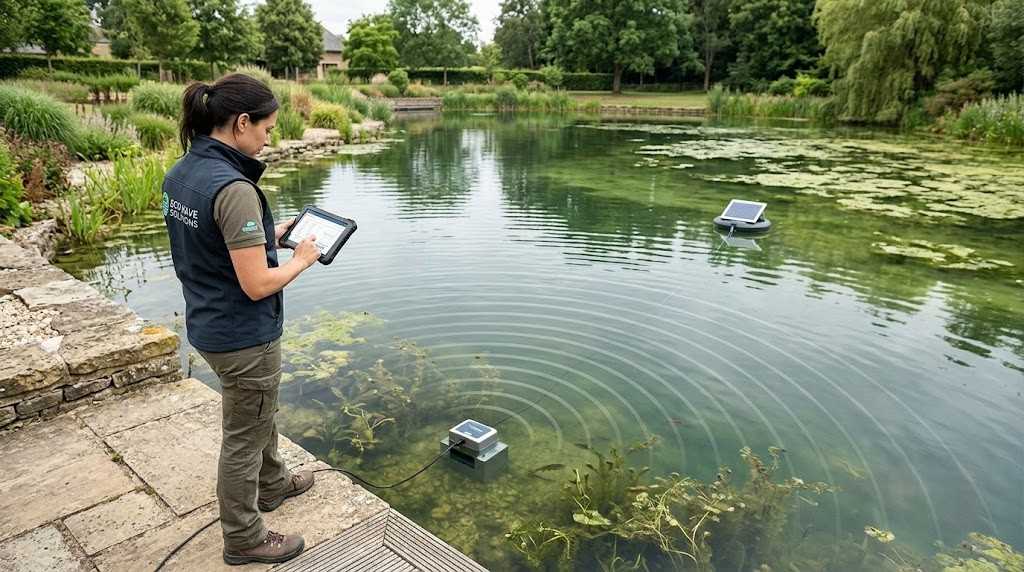
Ultrasonic algae treatment uses underwater sound energy to target susceptible algae. Puroxi’s current Quattro DB technology uses a library of programmed frequencies selected according to the application.
The objective is to interfere with algae buoyancy. When susceptible algae lose their ability to remain in the preferred light zone, they can move away from the surface. Reduced light exposure can then limit photosynthesis and help manage growth.
Different water bodies may require different transmission patterns. For example, Puroxi offers configurations designed for different water-body geometries and depths.
Real-time monitoring can also provide valuable information during treatment. Depending on the project, monitoring may include:
- Temperature
- Dissolved oxygen
- pH
- Oxidation-reduction potential
- Conductivity
- Salinity
- Total dissolved solids
- Turbidity
- Water clarity
- Chlorophyll or blue-green algae indicators
This data can help operators understand water conditions rather than relying only on visual observations.
Building a Sustainable Algae Management Strategy
A sustainable approach should address more than visible algae. Operators should consider the complete water system.
First, establish baseline water conditions. Next, identify the algae species and contributing factors. Then, select a treatment approach that fits the site.
A practical strategy may involve:
- Testing the water.
- Identifying the algae.
- Reviewing nutrients and environmental conditions.
- Evaluating water movement and depth.
- Establishing treatment objectives.
- Selecting suitable technology.
- Monitoring water-quality changes.
- Reviewing results and refining the approach.
Puroxi follows a site-specific process that begins with understanding water and operating conditions. It then identifies contributing causes, designs a treatment approach, and monitors results.
Combine Treatment With Better Water Management
Algae control may work best as part of a broader water-management plan. For example, Puroxi nano bubble nozzles, aeration and circulation can support water movement and oxygenation. Monitoring can reveal changing conditions. Ultrasonic treatment can address suitable algae populations.
However, these technologies should not automatically be combined at every site. Puroxi notes that treatment technologies should be selected according to what the water requires. This site-specific approach can help avoid unnecessary equipment and focus resources on actual water problems.
A Smarter Approach to Long-Term Algae Control
Preventing recurring algae problems requires consistency. A single treatment event may not address the conditions that encourage future growth. Instead, water managers can use monitoring and preventive strategies to understand seasonal changes and emerging risks.
Regular measurements can reveal trends before they become serious problems. Operators can then adjust treatment strategies based on actual water conditions. Ultrasonic systems may also provide continuous management for suitable applications. Puroxi offers optional water-quality monitoring for parameters such as temperature, dissolved oxygen, pH, conductivity, turbidity, and algae indicators.
Ultimately, sustainable algae management begins with better understanding. By combining testing, monitoring, appropriate treatment, and ongoing evaluation, water managers can reduce unnecessary chemical dependence while working toward healthier water conditions.
If you are looking for a site-specific approach to algae management and sustainable water treatment, Puroxi can help you evaluate your water conditions and explore suitable solutions for your application.
Frequently Asked Questions
Natural algae control uses monitoring, water management, and suitable technologies to reduce algae without relying solely on chemicals.
Regular monitoring, nutrient management, circulation, oxygenation, and appropriate algae-control technologies can help prevent recurring algae blooms.
Chemical-free treatment can effectively manage suitable algae when technology selection matches water conditions and target species.
Ultrasonic treatment uses programmed sound frequencies to interfere with algae buoyancy and reduce their exposure to sunlight.
Suitability depends on species, water conditions, and system selection, so aquatic-life considerations should guide treatment decisions.