The Puroxi Algae Bottle Test
The Puroxi Algae Bottle Test is a simple way to observe whether visible material tends to float, remain suspended or settle after a representative sample is left undisturbed. The result helps Puroxi ask better questions about the water body and possible treatment pathway.
What you need
- A clean, clear, colourless bottle or jar with a secure lid.
- Gloves and any site-required personal protective equipment.
- A label and marker.
- A phone or camera for time-stamped photographs.
- A safe representative sampling location.
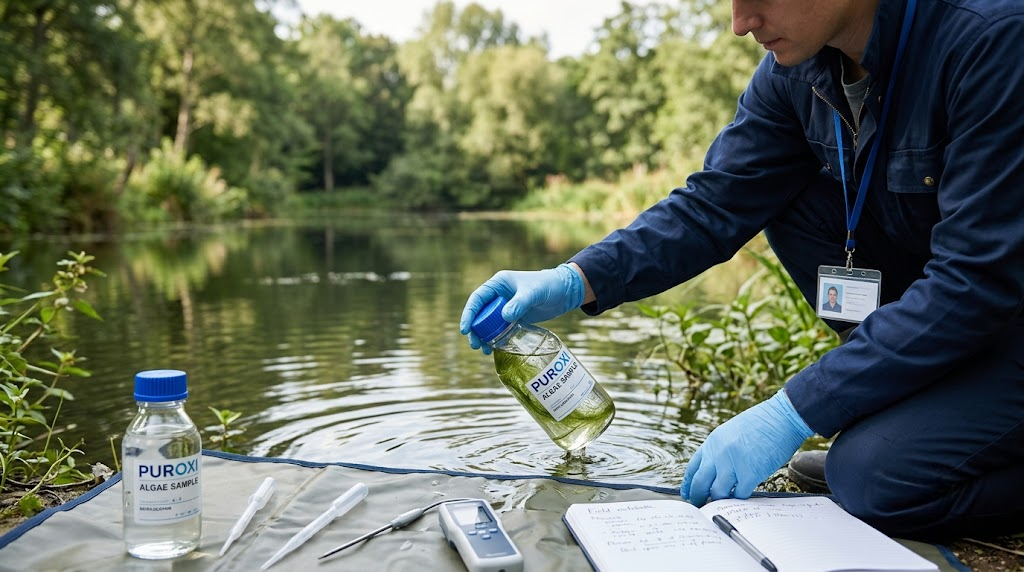
How to collect the sample
- Do not enter unsafe water or reach into a bloom. Avoid inhaling spray or contacting material of unknown safety.
- Collect a representative sample from the affected area without deliberately concentrating only surface scum unless Puroxi requests a separate surface sample.
- Fill the clear container, close it securely and label the source, location, date and time.
- Photograph the sample immediately against a plain background.
- Place it in a stable, shaded location where it will not be disturbed.
- Photograph it again after approximately 30 minutes, two hours and—when safe and useful—after a longer observation period.
- Do not open, smell, touch, drink or reuse the sample container. Dispose of it according to local guidance.
What to observe
- Material gathering near the surface.
- Material remaining distributed through the water.
- Particles settling toward the bottom.
- Changes in colour, layers or clarity.
- Gas bubbles, odour noted before closing, or unusual debris.
- Differences among samples from separate locations or depths.
How Puroxi uses the observation
Floating or buoyant material may suggest a different distribution pattern from material that settles quickly. Suspended material may require further identification. The observation is combined with photographs of the water body, dimensions, depth, obstructions, inflows, temperature, fish or aquatic life, water testing and the treatment objective.
What the bottle test cannot tell you
It cannot confirm the organism, toxin production, biological safety or the correct product. Cyanobacteria and other algae can present health risks. When identification or safety matters, use an appropriately qualified laboratory and follow the direction of the responsible local authority.
Information to send Puroxi
- All time-sequence photographs.
- Water-body length, width, average and maximum depth.
- Aerial image or sketch showing islands, coves, walls and other obstructions.
- Power location and distance to the intended treatment area.
- Existing aeration, fountains, pumps or treatment.
- Fish, shellfish, livestock access or recreational use.
- Recent water results and seasonal history.
PUROXI PRINCIPLE
Understanding Always Comes Before Recommendation.