
The Five Stages of Nano-Bubble Generation
A Puroxi Nano Bubble Nozzle is one part of a designed gas-transfer system. The result depends on the relationship among water flow, pressure, gas delivery, nozzle model, piping and discharge arrangement.
Stage 1 — Water is moved through the system
A suitable pump draws water from the application and delivers the required flow to the nozzle. Pump selection must be based on the complete system duty point, including nozzle operating pressure, static elevation and pipe, fitting and equipment losses—not motor power alone.
Stage 2 — Pressure prepares the water stream
The nozzle requires appropriate inlet pressure to create the intended internal conditions. Puroxi MNB systems generally require at least 30 psi, with many designs operating in a preferred 40–50 psi range
when compatible with the selected model and application. Final requirements must come from the current nozzle data and pump curve.
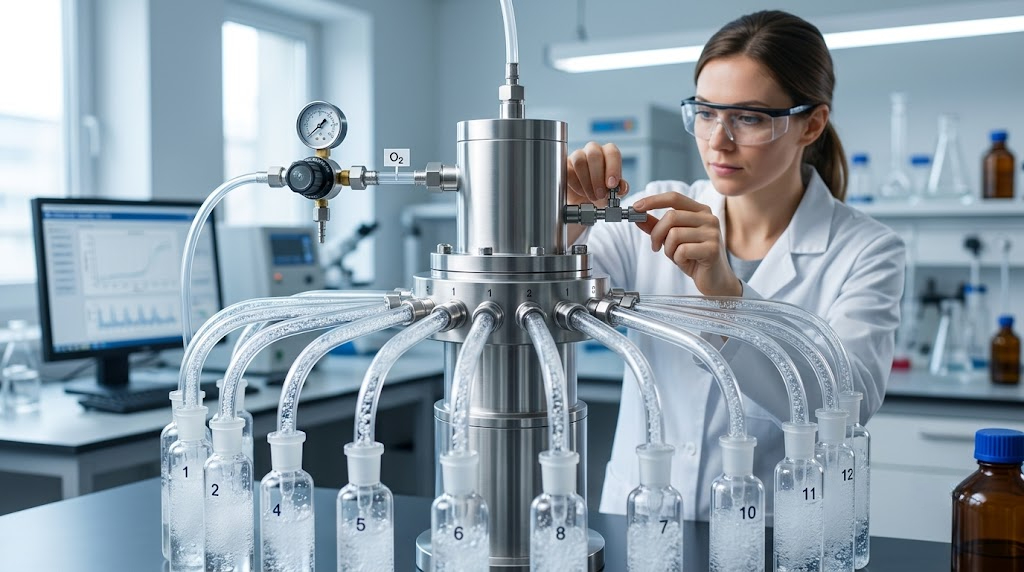
Stage 3 — The selected gas reaches every gas port
Ambient air, oxygen, ozone, carbon dioxide, nitrogen or another approved gas can be distributed to the nozzle’s supplied gas ports when suitable for the objective. Every active port requires controlled, balanced and compatible gas delivery. Oxygen or ozone service may require external replaceable check valves and materials selected for that gas.
Hydrogen-peroxide-based liquid is not supplied through a gas port. When selected, it is normally dosed upstream into the moving water with a properly sized metering or peristaltic pump.
Stage 4 — Internal mixing breaks the gas into a fine population
Water and gas interact through the nozzle’s internal geometry. Flow, pressure and gas delivery create intense mixing and shear. The performance of the whole loop—not the nozzle body by itself—determines the resulting bubble population and transfer behaviour.
Stage 5 — Treated water returns to the application
The water leaves the opposite end of the nozzle and is distributed back into the tank, pond, process line or treatment zone. Outlet direction, circulation, turnover and the distance from intake to discharge influence how effectively treated water reaches the intended area.
What must be designed together
- Water volume and required turnover.
- Nozzle model, quantity and flow per nozzle.
- Pump curve and total dynamic head.
- Pipe diameter, line length, elevation, fittings and filtration.
- Gas source, purity, pressure and flow to every port.
- Intake screening and discharge arrangement.
- Water chemistry, temperature and salinity.
- Monitoring, cleaning, controls and safe shutdown sequence.
Operating sequence
Unless the approved installation instructions specify otherwise, establish gas supply before starting the water pump, then start the pump and verify flow, pressure and gas delivery. For shutdown, stop the pump before stopping gas, then complete any required purge or service procedure. Keep ambient-air filters clean and gas lines protected.
PUROXI PRINCIPLE
Understanding Always Comes Before Recommendation.